Explore our curated industrial-grade selection of food preparation tools engineered for precision and durability.
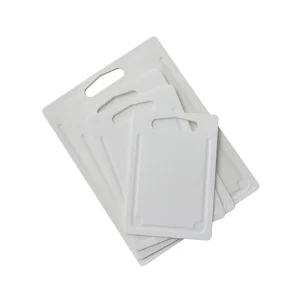
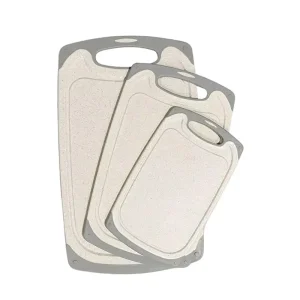
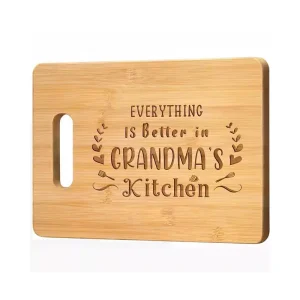
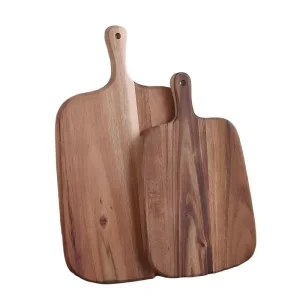
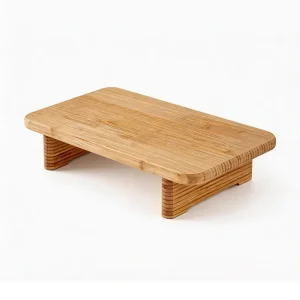
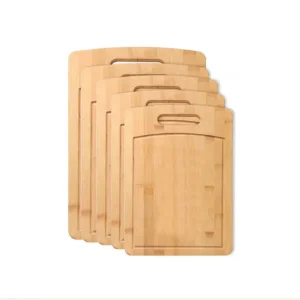
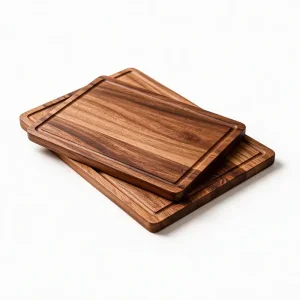
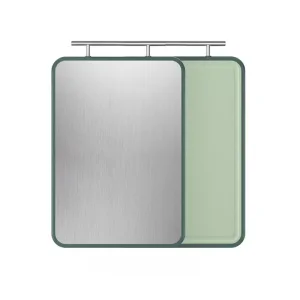
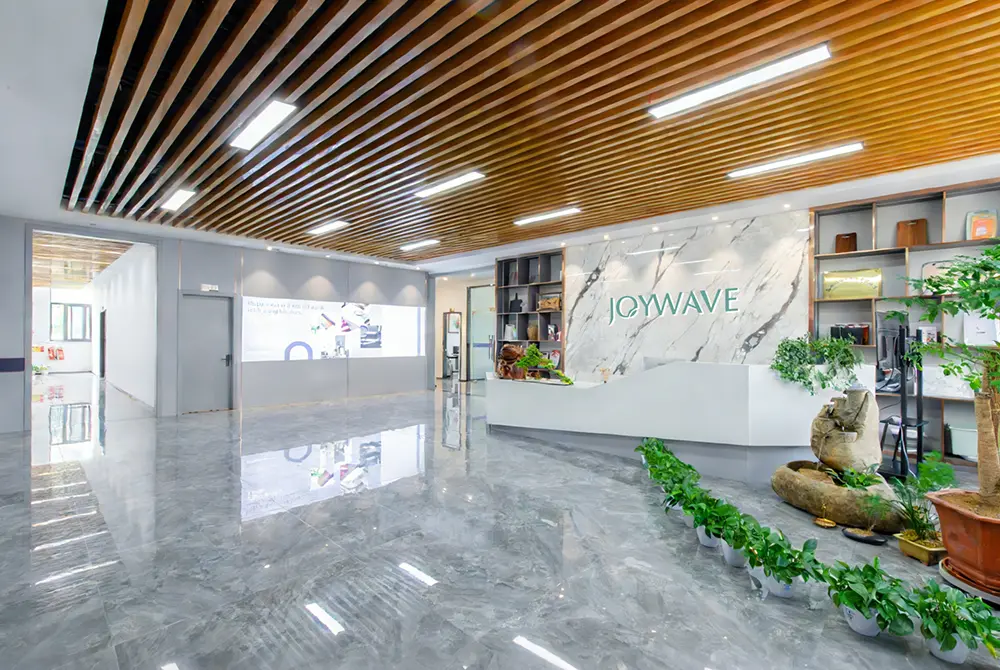
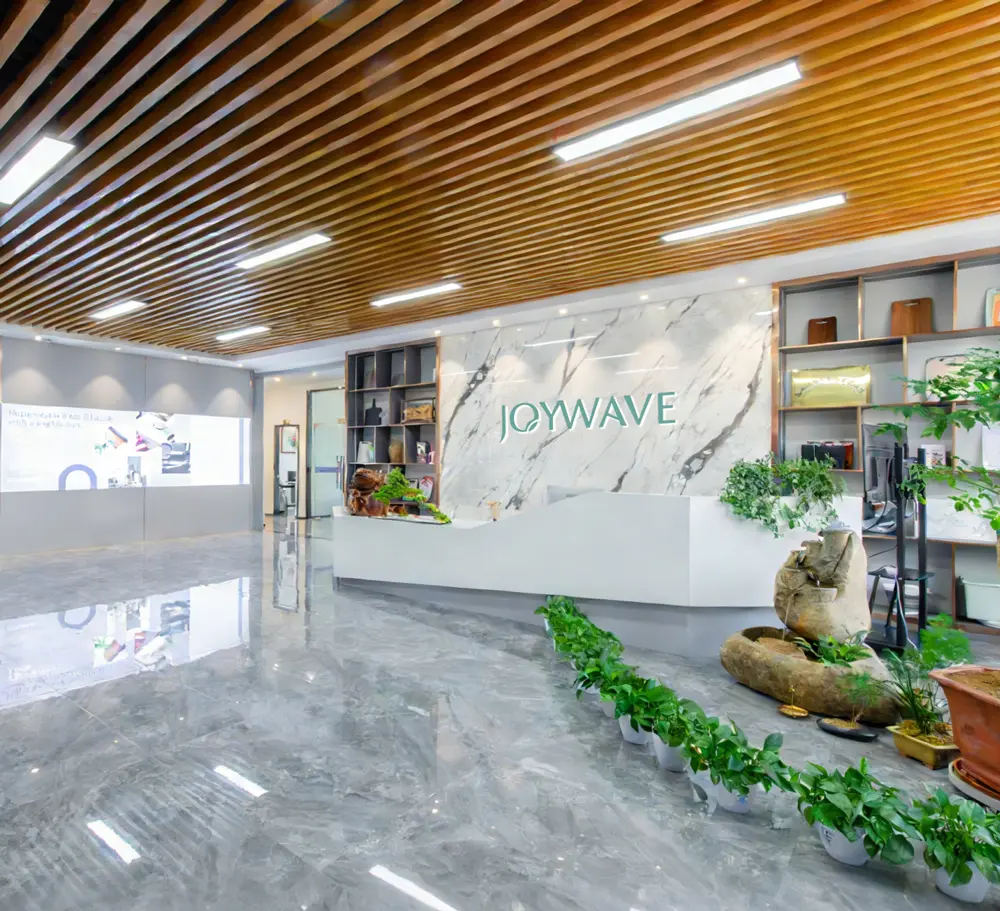
Founded in 2013 and based in Ningbo, China, JOYWAVE has established itself as an authoritative leader in culinary OEM manufacturing. Over more than a decade of research, iteration, and industrial expansion, we have integrated comprehensive in-house product conception, mold design, raw material engineering, and bulk production line execution. Our state-of-the-art facilities cater directly to high-volume procurement demands from the world's most prestigious retail networks and hospitality supply chains.
Through robust engineering practices and sustainable forest resource sourcing, we ensure every natural wood, bamboo, and composite cutting board complies with the most stringent food safety regulations globally. Our holistic industrial ecosystem provides tailored, bespoke solutions that turn concepts into shelf-ready retail successes.
An in-depth look at macroeconomics, wood biology, and shifting consumer demographics affecting commercial food prep surfaces.
The global natural wood cutting board market is underpinned by specialized material sourcing. Industrial buyers look past aesthetic considerations to inspect key properties like the Janka Hardness rating, fiber structure, and natural oils present in the wood. Hardwood species like Walnut (Juglans nigra) and Acacia (Acacia sensu lato) are highly favored for premium culinary use because of their high density and resistance to fiber scarring.
Acacia wood boasts an intricate network of interlocking grains and high concentrations of natural resins. This structural composition makes it naturally moisture-resistant and less prone to warping compared to softwoods. American Black Walnut offers a balanced hardness profile that preserves the sharp edges of professional chef knives. It also features a rich, dark hue that resists staining from highly pigmented foods. Wood cutting board manufacturers must carefully manage kiln-drying processes to achieve a target moisture content of 6% to 9%. This is the critical threshold required to prevent checking, splitting, and warping when boards are shipped across different global climates.
Modern commercial kitchens require versatility. Because of this, the global market has seen a growing demand for hybrid cutting surfaces that integrate different materials. While natural hardwood blocks are ideal for heavy slicing, carving, and table-side presentation, high-volume prep areas often combine wood with dual-sided stainless steel or food-grade, BPA-free polypropylene elements. This approach reduces cross-contamination risks and simplifies sanitization procedures.
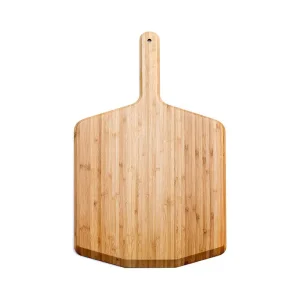
Sustainable wood alternatives, such as Moso Bamboo and wheat straw composites, have moved from niche products to high-volume commercial categories. Bamboo matures rapidly (typically in 3 to 5 years), making it an excellent resource for eco-conscious brands looking to minimize their carbon footprint. The manufacturing process for high-density bamboo boards involves splitting, boiling, carbonizing, and kiln-drying the raw stalks before pressing them under high pressure using food-grade adhesives. This yields a surface that is harder than oak, naturally antimicrobial, and structurally stable.
Importing kitchenware on a large scale requires strict adherence to international safety and forestry standards. Large retail brands like Walmart, Costco, and Williams Sonoma require their manufacturing partners to be certified by the Forest Stewardship Council (FSC). This certification guarantees that the wood raw materials are sourced from responsibly managed forests that provide environmental, social, and economic benefits.
In addition to raw material tracing, chemical migration limits are strictly regulated by food safety authorities such as the FDA (Food and Drug Administration) in the United States and the LFGB (Food and Feed Code) in Europe. Cutting boards must be free of toxic formaldehyde resins, heavy metals, and volatile organic compounds (VOCs). JOYWAVE applies rigorous quality assurance steps at every stage of production, from selecting non-toxic adhesives to applying food-safe mineral oils. This ensures our products are ready to pass all customs and retail compliance audits.
How Ningbo's industrial cluster and advanced automated systems drive down lead times while maintaining premium international standards.
China's kitchenware manufacturing sector has transitioned from manual labor-intensive workshops to highly automated, smart factories. Positioned within Ningbo’s deep-water port logistics hub, JOYWAVE leverages a highly localized supply chain ecosystem. We source premium domestic raw materials and import hardwoods directly, keeping shipping costs low and lead times short.
Our facility utilizes computer-controlled CNC routing machines to cut shapes with tight tolerances, mill juice grooves, and shape handles. By using automated robotic arms to transfer molded pieces and apply non-slip edges, we eliminate human error and maintain consistent product quality. These technological advantages enable us to handle high-volume OEM orders efficiently, giving our clients a competitive edge in international markets.
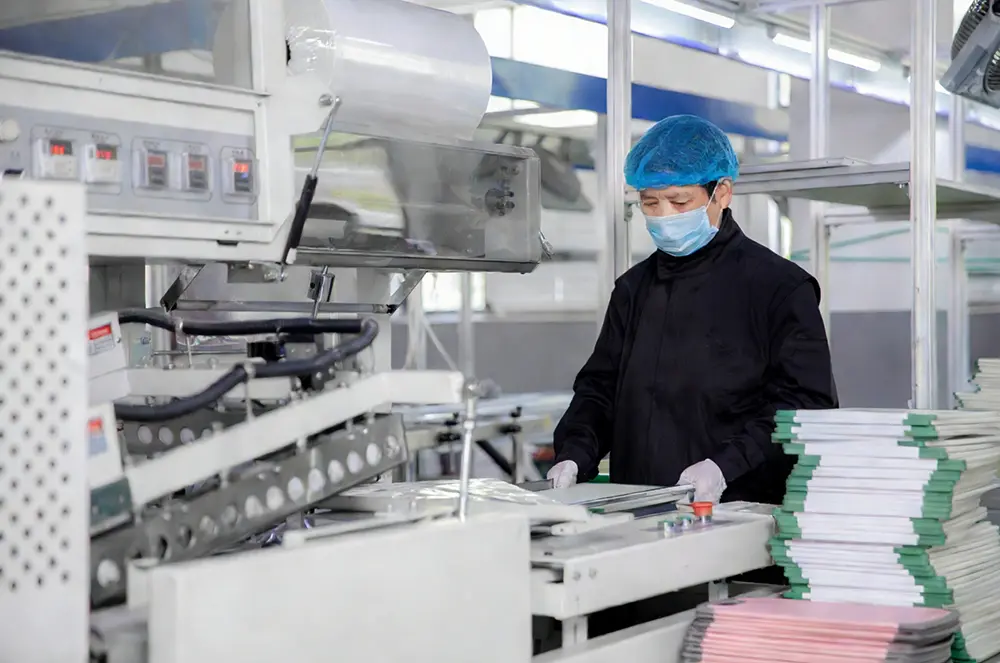
Combining material science and automated manufacturing to deliver defect-free products.
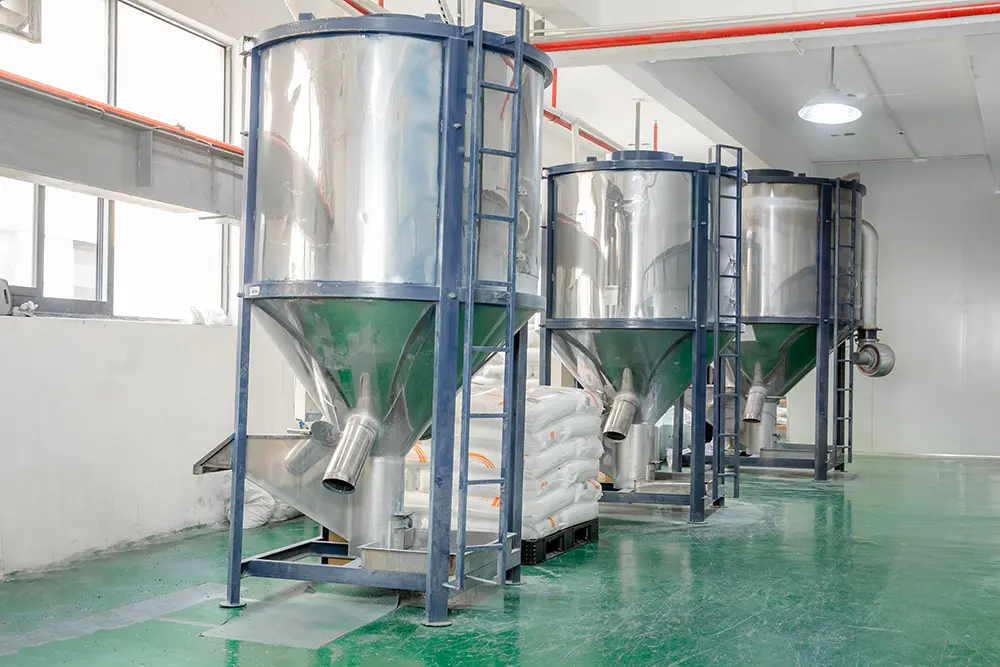
Blending polymers, color pigments, and functional additives in industrial mixers to ensure consistent material distribution.
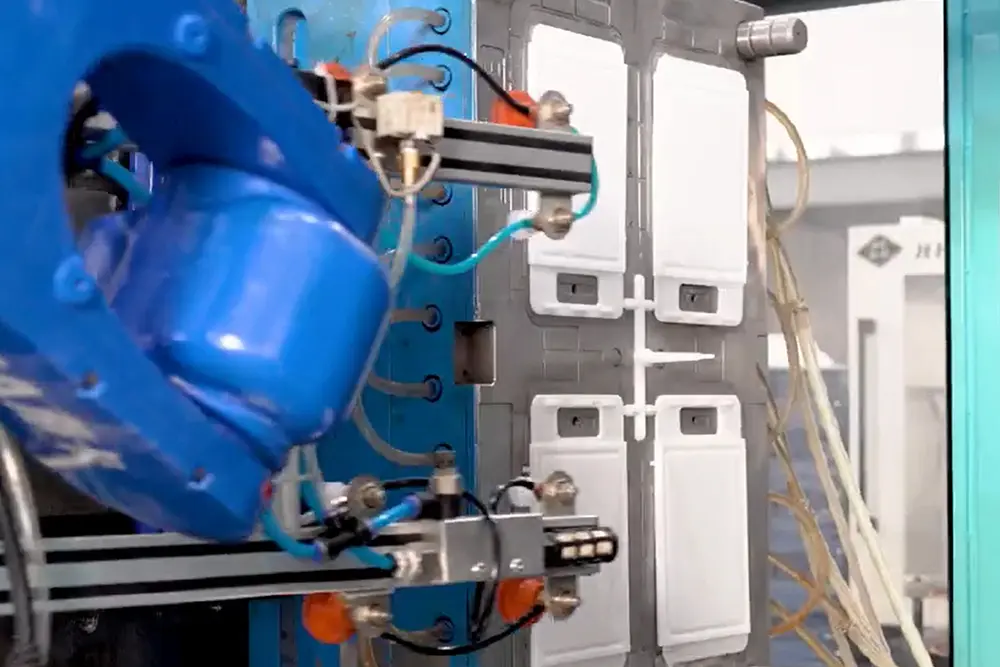
Injecting the blended materials into precision steel molds under high pressure to shape the board's core structure.
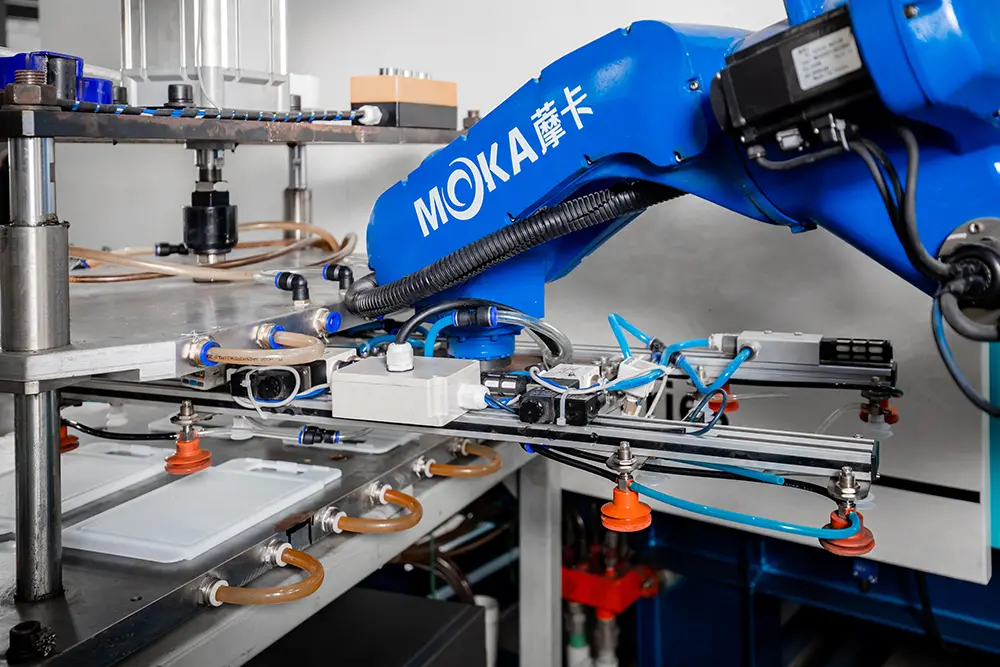
Automated robotic arms safely demold the hot components, transferring them to cooling stations to prevent warping.
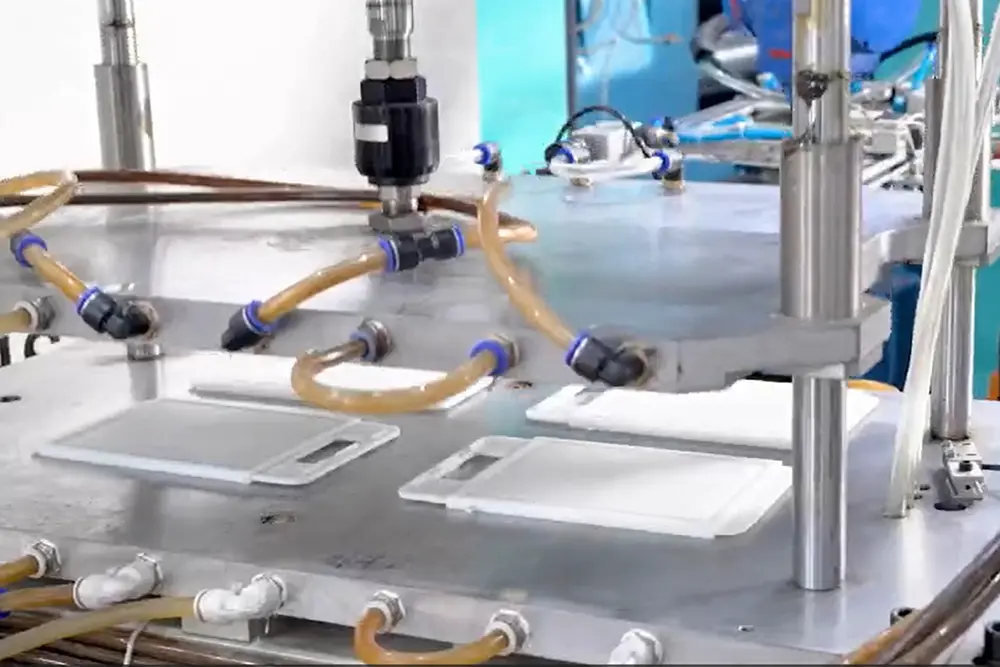
Placing the boards under weight-controlled cooling fixtures to ensure they remain flat and dimensionally stable.
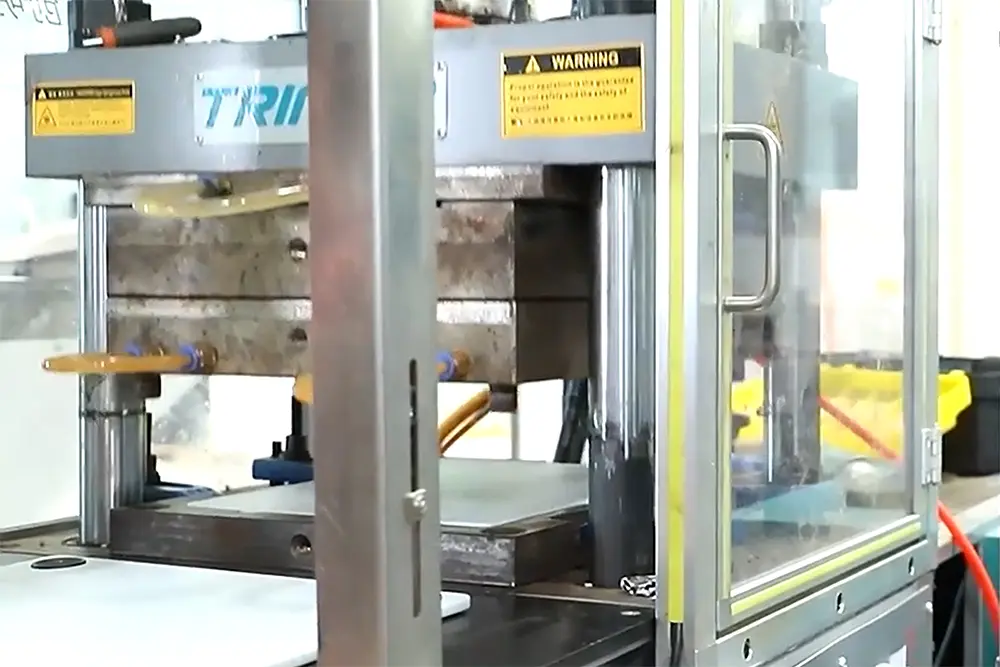
Over-molding thermo-plastic elastomer (TPE) borders onto the edges to create high-friction, non-slip grips.
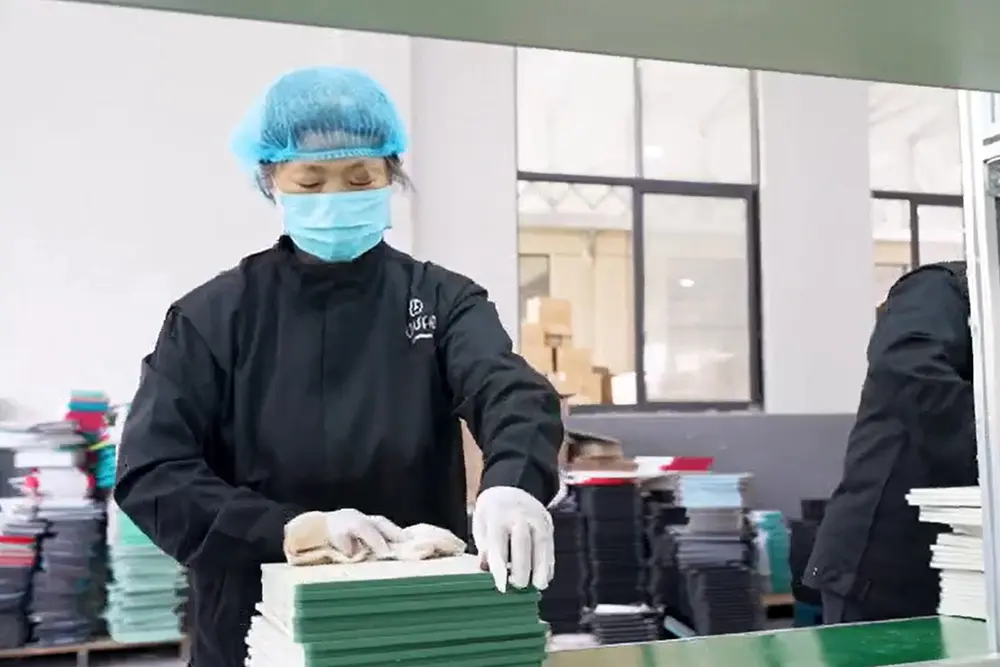
Thoroughly cleaning each board to remove any residual dust, oils, or particles from the molding process.
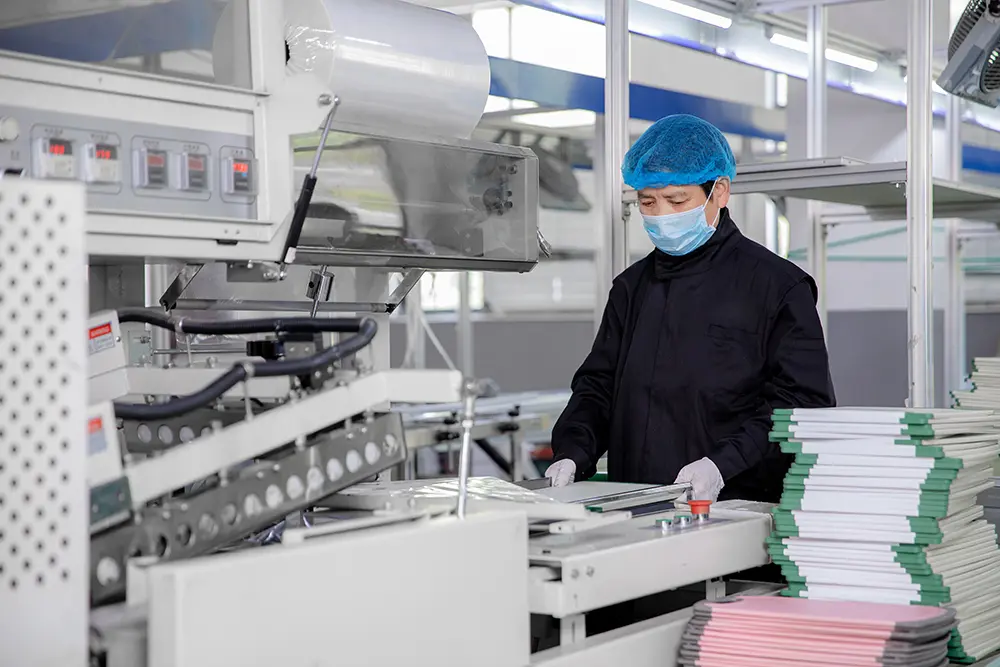
Applying the product labels and shrink-wrapping each unit in protective film for distribution.
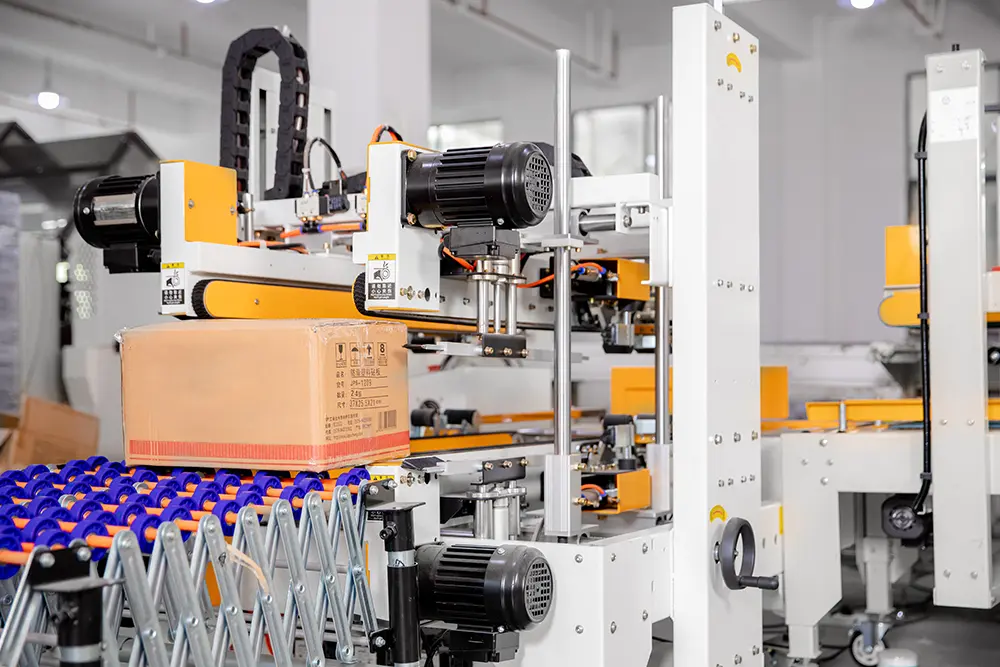
Packing the wrapped cutting boards into heavy-duty corrugated cartons, ready for shipping and global logistics.
We work closely with global design teams to translate initial sketches and 2D concepts into functional, manufacturable products. Our team manages the entire process, including detailed mechanical CAD layouts, 3D printing rapid prototyping, mold steel selection, and pilot runs.
We customize a wide range of product attributes to match our clients' target markets. These options include engraving custom branding, modifying juice groove configurations, and designing specialized functional bases (such as non-slip feet or dual-sided designs). Our streamlined development process helps minimize upfront tooling costs and shortens time-to-market.
We convert your ideas and 2D concepts into precise CAD drawings for review and verification.
Upon CAD approval, we fabricate production-ready steel molds and produce initial samples.
Once samples are approved, we begin full-scale production to meet your delivery timelines.
We manage quality control inspection, packing, customs clearance, and global ocean freight shipping.
How we tailor our product lines to meet the unique tastes, styles, and regulatory requirements of regional markets.
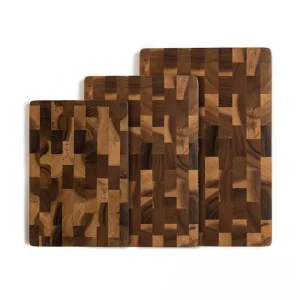
Buyers in this region favor large, thick end-grain cutting blocks and acacia carving boards featuring deep juice grooves. These products are popular for weekend barbecues and serving large cuts of meat. Retailers in North America prioritize strict FDA compliance, sustainable forestry certifications, and robust retail packaging suitable for display shelves.
European markets prioritize FSC-certified hardwoods, sleek profiles, and multi-functional designs. Dual-sided boards that combine clean wood with hygienic polypropylene or stainless steel are popular for compact urban kitchens. Products must comply with European LFGB standards, which restrict chemical migration in food contact materials.
Australia’s outdoor dining culture drives demand for weather-resistant acacia wood and bamboo serving boards. Latin American commercial suppliers focus on durable chopping blocks that can withstand heavy-duty daily food preparation. This requires using high-density woods and food-safe, moisture-resistant bonding materials.
Get answers to common questions about material sourcing, care instructions, and commercial wholesale procurement.
Get in touch with our product engineers to discuss your OEM requirements. We respond to all inquiries within 24 hours.
Engineered for high-volume commercial use and premium retail display.
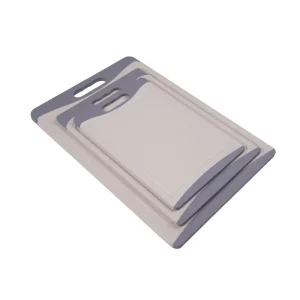
 Joywave