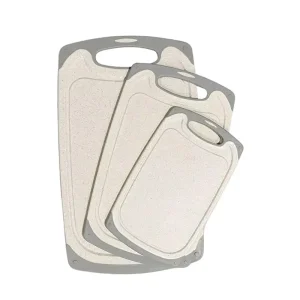
Explore our industrial-grade, certified cutting surfaces designed for retail leaders, global culinary suppliers, and enterprise-grade environments.
Evaluating the commercial transition toward wood polymer hybrids and premium solid hardwood boards in the global enterprise market.
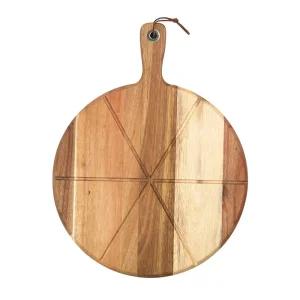
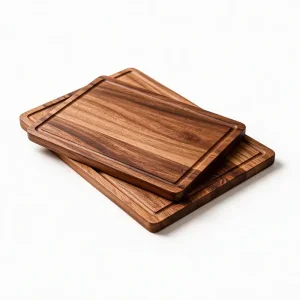
In the contemporary B2B culinary equipment landscape, selecting a surface material is no longer just about basic meal prep. The global market is witnessing an unprecedented transition back to solid hardwood cutting blocks, driven by micro-level structural integrity demands and strict public health compliance. While plastic and composite polymers retain high demand due to weight and washing convenience, professional kitchens and high-end consumer brands are pivoting toward sustainably sourced solid wood species like Acacia and Walnut for superior blade preservation, organic sanitary attributes, and premium visual identity.
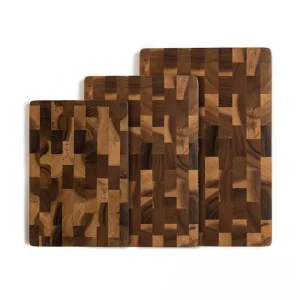
According to forestry product reports and global supply chain analyses, the industrial kitchenware market is undergoing a clear stratification. Mass retail distribution favors multi-pack polymer sets (PP/PE) with non-slip elements, whereas premium lifestyle brands (such as Williams Sonoma, HomeGoods, and professional food-service organizations) demand high-density wood constructions. These include End-Grain and Edge-Grain butcher blocks, which display self-healing fiber properties that inhibit deep-groove bacterial colonization, offering a significant performance advantage over synthetic alternatives.
Unlike polymers that sustain permanent, harbor-prone scarring from knife blades, end-grain timber fibers pull apart under compression and recover naturally. This self-healing characteristic significantly reduces bacterial colonization risks.
High-tannin wood structures (e.g., Acacia and Oak) release natural organic compounds that exhibit micro-level antimicrobial efficacy, neutralizing bacteria within hours compared to non-porous plastics.
Engineered solid woods balance raw density with shock absorption. Rated ideally on the Janka hardness scale (e.g., Acacia ~1,100 to 1,750 lbf), they resist wear while protecting precision cutlery steel.
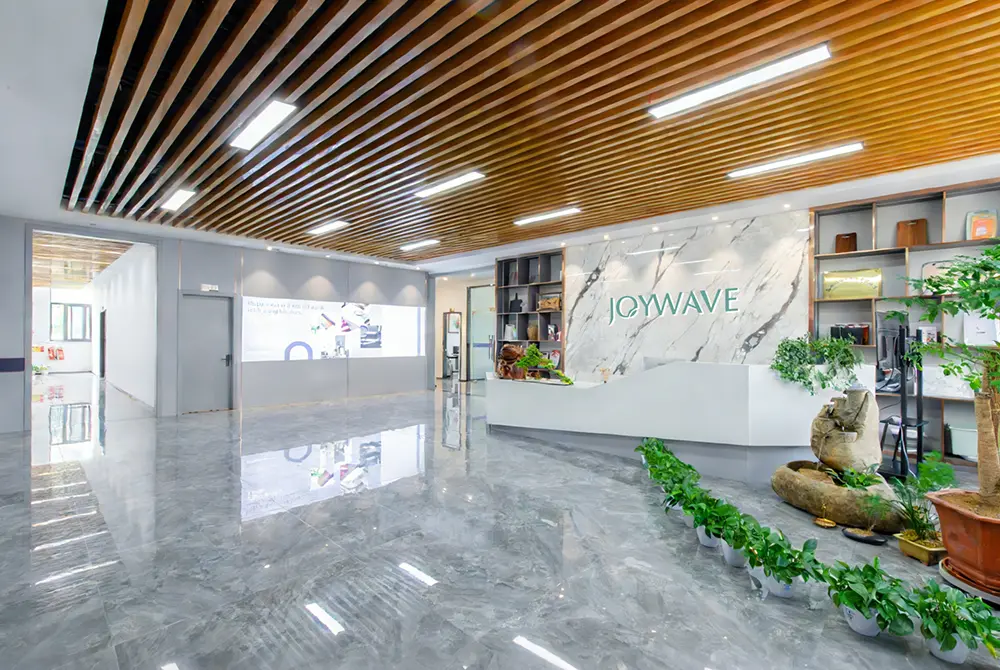
JOYWAVE: Global OEM/ODM Kitchenware Manufacturing Leader
Founded in 2013 in the industrial port hub of Ningbo, China, JOYWAVE has evolved into a premier OEM/ODM manufacturer specializing in precision-engineered food preparation surfaces. Over more than a decade of development, we have combined research, raw material selection, tool engineering, and vertically integrated manufacturing to supply major global retailers and hospitality providers.
Our core capabilities range from mass-scale eco-friendly polymer extrusion to precision solid-wood joinery (Acacia, Walnut, Beech). By optimizing local supply chains and maintaining strict quality control, we provide tailored manufacturing solutions for top-tier retailers, including Walmart, Costco, Macy's, HomeGoods, and Williams Sonoma.
Custom design-to-delivery workflows engineered to handle complex specifications and high-volume orders for global markets.
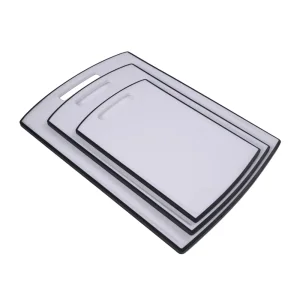
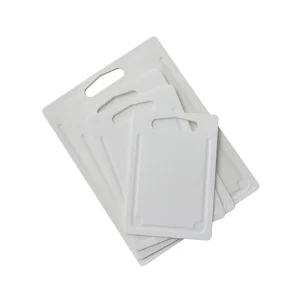
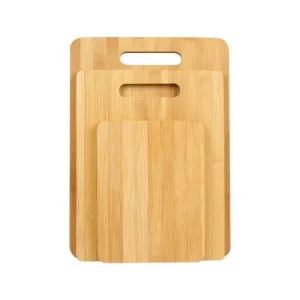
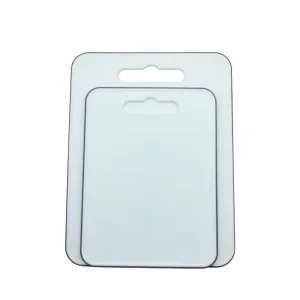
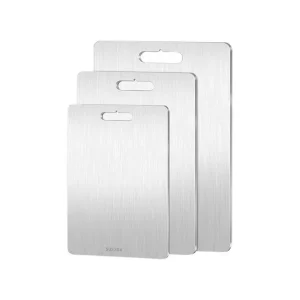
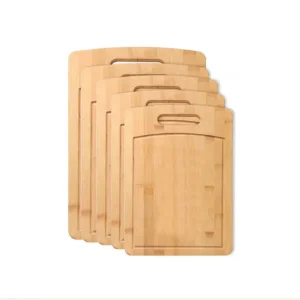
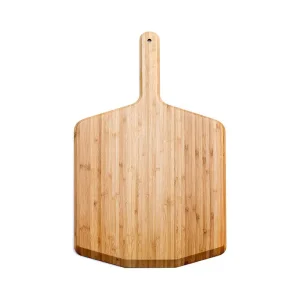
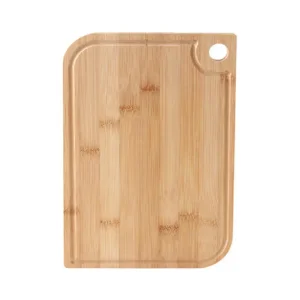
Our capabilities extend beyond standard solid wood cutting boards into a diverse "Cutting Board & More" portfolio. We manufacture in high-performance Polypropylene (PP), Polyethylene (PE), sustainable Bamboo, Premium Hardwoods (Walnut, Acacia), Stainless Steel, and wheat-straw biocomposites. This structural versatility allows us to offer one-stop sourcing for global brands looking to build cohesive, high-quality kitchenware product lines.
Translating 2D concept sketches, industrial designs, or functional parameters into production-ready CAD files. We optimize designs for structural stability, timber yield, and injection-mold flow efficiency.
Our in-house tooling division rapidly develops molds for polymer components and custom wood shaping. We provide fully functional prototypes to verify dimensions, textures, and finishes before full-scale manufacturing.
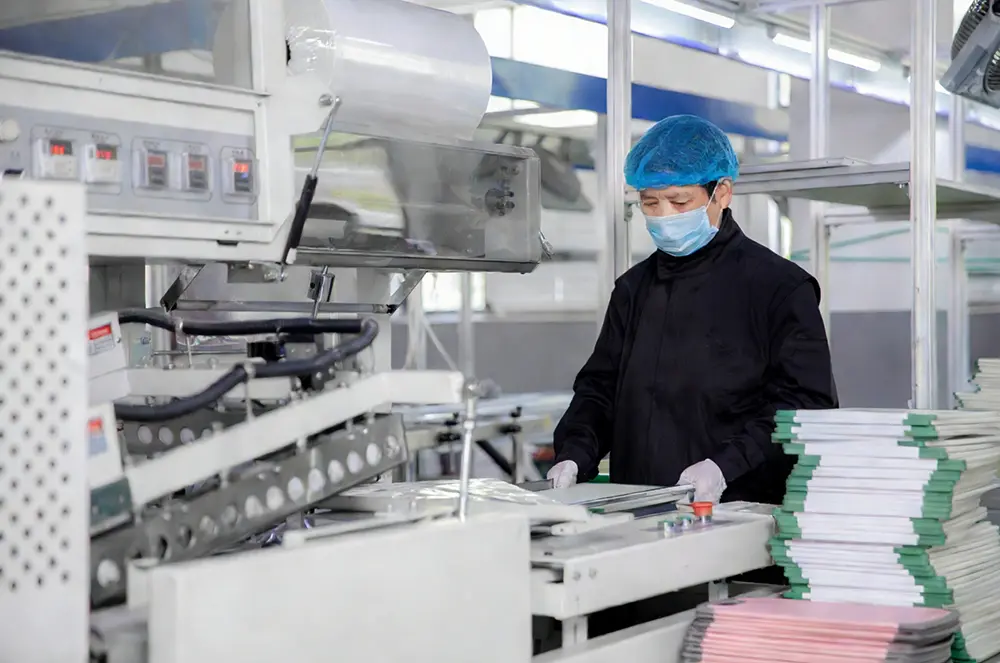
We perform automated timber milling, moisture-level checks, injection molding, over-molding, and assembly under strict quality standards. Batch testing validates food-contact safety and joint integrity.
Strategically located near the Port of Ningbo, we manage custom packaging, container optimization, export clearance, and logistics to ensure seamless delivery to international markets.
Innovative material engineering and design solutions shaping the future of hygienic food preparation.
To maintain our competitive advantage, JOYWAVE's engineering division focuses on advanced research and development across several key technical areas:
Color pigments and polymers are mixed in high-shear blenders to ensure uniform dispersion and color stability.
Blended materials are fed into automated molding systems, where high-pressure clamping shapes the core substrate.
Automated mechanical arms extract the molded boards and transfer them to active cooling stations.
Boards are cooled under mechanical pressure to prevent warping and ensure flat, uniform surfaces.
A secondary thermoplastic elastomer (TPE) is molded onto the borders and handles to create high-friction, non-slip grip zones.
Boards undergo flash removal and manual inspections to ensure smooth edges and uniform quality.
Product labels are applied, and boards are shrink-wrapped in protective, dust-free packaging.
Packaged products are boxed, loaded onto pallets, and secured for export shipping.
Adapting product lines to regional demands while leveraging Ningbo's world-class shipping hub.
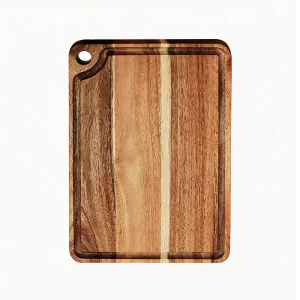
A key aspect of JOYWAVE's strategy is matching our product designs to regional culinary habits and retail standards. In North America, consumer preference tilts toward heavy-duty, large-format end-grain butcher blocks and thick acacia boards with integrated deep juice grooves, designed for large cuts of meat and outdoor grilling. In the European market, product designs favor thinner profiles, FSC-certified sustainable timber, and multi-functional boards suited for small-space kitchens and serving cheese or charcuterie. Our designs are optimized to align with these distinct regional expectations.
Supporting this regional customization is our manufacturing hub in Ningbo, China. Strategically located near the Port of Ningbo-Zhoushan, the world's busiest port by cargo tonnage, we minimize inland transit costs and reduce international lead times. We mitigate global supply chain fluctuations through local raw material sourcing, automated inventory management, and long-standing partnerships with shipping lines. This geographical and operational setup helps protect our clients from unexpected logistics disruptions.
Our proximity to the Port of Ningbo-Zhoushan ensures streamlined customs clearance, efficient ocean freight dispatch, and minimal inland transit costs.
We maintain deep relationships with certified timber mills and polymer suppliers to ensure stable pricing and consistent material quality, even during peak production seasons.
Our operations comply with global standards and regularly pass BSCI, SMETA, and major retailer social audits, simplifying compliance for international importers.
Answering key questions on material selection, compliance, care, and factory capabilities.
Explore our additional kitchenware collections, from premium hardwoods and eco-composites to professional food-prep equipment.
 Joywave