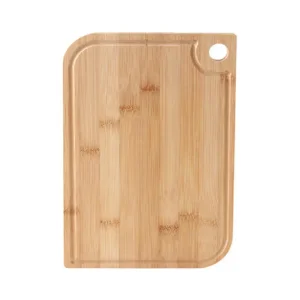
The Evolution of Commercial Culinary Prep Systems
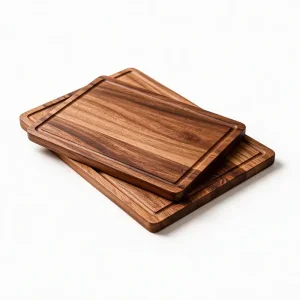
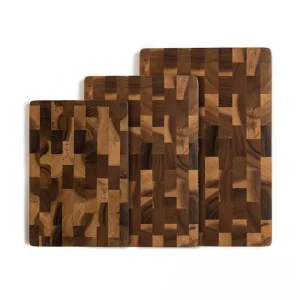
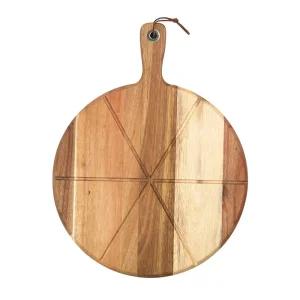
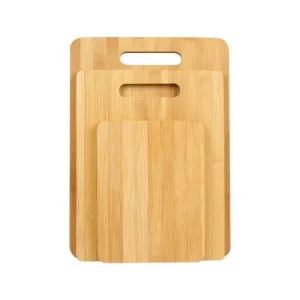
In the modern hospitality and food-retail sectors, the wooden large chopping board—often referred to in commercial contexts as a butcher block—has moved beyond a simple kitchen accessory to become a critical piece of industrial food preparation infrastructure. Sourcing managers and global buyers look for premium hardwood configurations to solve major pain points in commercial kitchens: durability, knife-edge preservation, and food-contact hygiene.
As a global exporter based in China's manufacturing heartland of Ningbo, JOYWAVE utilizes state-of-the-art wood processing techniques to satisfy these requirements. Historically, plastic prep boards dominated commercial spaces due to their low cost and ease of sanitization. However, modern environmental regulations, combined with microplastic contamination concerns and advanced research into the natural antimicrobial properties of certain hardwoods, have driven a structural market shift back to heavy-duty, large-scale wooden boards.
Material Science: Acacia, Walnut, and End-Grain Engineering
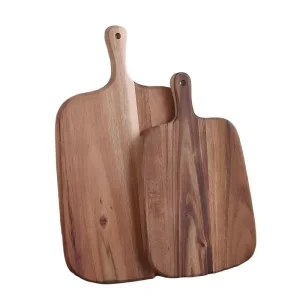
For a wooden chopping board to perform reliably at large dimensions (such as 18x24 inches or thicker blocks), the choice of timber and fiber orientation is critical. The Janka Hardness Rating determines the wood’s capacity to resist denting and wear from heavy knives. Acacia Wood, with a Janka rating ranging from 1,100 to 1,750 lbf, represents an ideal balance of hardness and flexibility. Black Walnut (Janka rating of ~1,010 lbf) is highly prized in luxury food service and charcuterie presentation for its rich grain patterns and dimensional stability.
From a structural perspective, End-Grain construction is the gold standard for high-intensity commercial chopping. In end-grain boards, the wood fibers run vertically (perpendicular to the cutting surface). When a knife strikes, the fibers part to absorb the impact and then naturally close back up, a process known as "self-healing." This prevents deep score marks where food residue can hide, while significantly extending the life of premium cutlery. In contrast, edge-grain boards lay the wood fibers horizontally, creating a harder cutting feel that is highly cost-effective for large prep areas and cheese presentations.
Environmental Compliance & Chemical Safety: The export of wood-based kitchenware to North America and the European Union requires strict adherence to international regulations. JOYWAVE guarantees that all raw materials are sourced from sustainably managed forests under FSC (Forest Stewardship Council) guidelines. Every board undergoes strict curing processes and uses only FDA and LFGB-approved, formaldehyde-free, food-grade adhesive bonding agents to prevent joint separation under wet conditions.
Overcoming Environmental and Transit Vulnerabilities
A major risk faced by wooden large chopping board exporters is structural deformation (warping, cupping, or checking) during maritime shipping. Variations in relative humidity within shipping containers can cause wood to absorb or release moisture rapidly.
To address this issue, JOYWAVE implements a rigorous Kiln-Drying Protocol, stabilizing all timber to an optimal moisture content of 8% to 12% before machining. This narrow window prevents the wood from contracting or expanding excessively when exposed to different climates in importing countries. Each export item is individually shrink-wrapped with desiccants and packaged in moisture-barrier cartons to preserve this equilibrium from the factory floor to the retail shelf.
 Joywave