China’s wood manufacturing sector offers a broad range of cutting board suppliers. Many produce complete Wood Cutting Board Set collections for homes, restaurants, hotels, and gift retailers. This guide examines ten notable Chinese suppliers through practical purchasing criteria. These include wood quality, board thickness, moisture control, machining accuracy, packaging, customization, and export experience.
A reliable supplier should explain its timber source clearly. Acacia, rubberwood, bamboo, walnut, and beech each have different textures and maintenance needs. Look closely at the board’s edge finishing. Rough corners can collect food particles and feel unpleasant during daily use. Glue lines also deserve attention, especially when several boards are joined together. Meredith Carothers, a food safety specialist with the USDA, has stated, “Consumers may use wood or a nonporous surface for cutting raw meat and poultry.” Her point supports a balanced view: material matters, but cleaning and proper separation matter too.
Not every attractive catalog signals consistent production. That is easy to forget. A supplier may show beautiful lifestyle photographs while offering limited quality control. Therefore, this selection considers factory evidence, product consistency, communication, certifications, sample performance, and buyer feedback where available. Some rankings may change as factories expand or sourcing conditions shift. No list is permanent.
The featured companies serve different market positions. Some focus on affordable household sets. Others specialize in premium hardwood boards, hotel projects, or private-label orders. Buyers should request samples, confirm dimensions, inspect surfaces, and test packaging before placing large orders. Small details often reveal the real supplier.
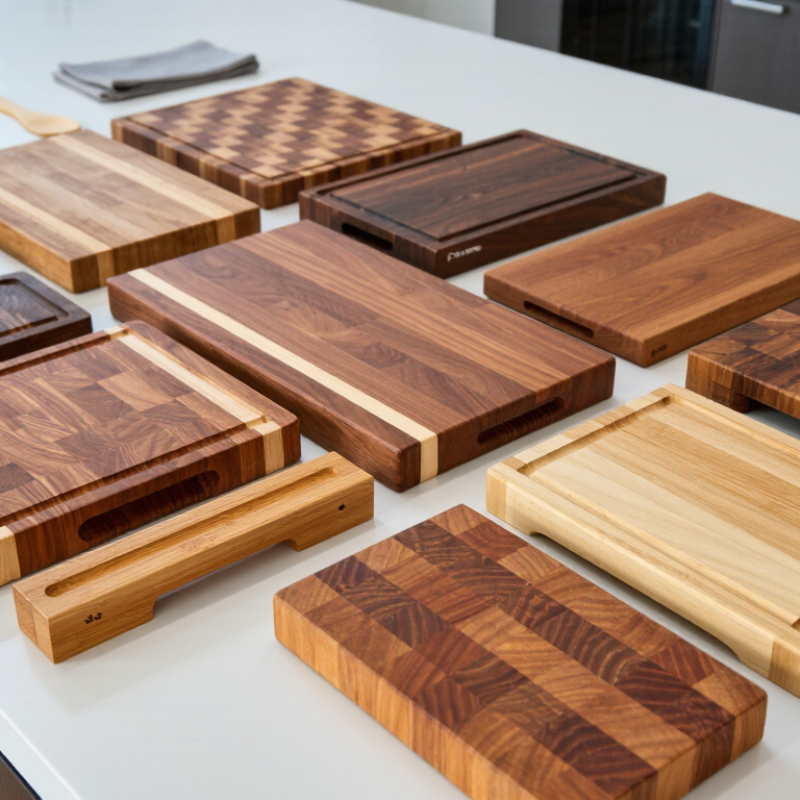
China’s wood cutting board set industry serves retailers, hospitality buyers, and private-label kitchenware distributors worldwide. Suppliers commonly operate near major timber, hardware, and export manufacturing centers. Their product ranges include bamboo, acacia, rubberwood, walnut, and laminated hardwood sets. Each material offers different hardness, grain appearance, moisture response, and cost.
Experienced buyers inspect more than surface polish. They review wood sourcing records, moisture content, adhesive safety, edge finishing, and packaging strength. Factory audits can reveal drying capacity, dust control, worker training, and batch consistency. Sample testing should include knife marks, warping, odor, washing instructions, and handle durability. These details often separate a dependable supplier from a simple trading office.
Customization is a major industry feature. Suppliers may develop engraved logos, color boxes, hanging holes, juice grooves, and mixed-size sets. However, attractive samples can create unrealistic expectations. Production changes may affect grain matching, dimensions, or delivery timing. That risk deserves written approval before mass production. Reliable communication also matters, especially when technical drawings cross language barriers. Some suppliers respond quickly but document poorly. Others provide careful records but move slowly. Neither weakness should be ignored. Certification claims require verification through current reports, not only scanned certificates. Buyers should compare defect rates, replacement policies, inspection procedures, and shipment history before choosing a long-term manufacturing partner.
Comparative overview of representative Chinese supplier profiles based on commonly available manufacturing capabilities, export practices, materials, order quantities, and production lead-time ranges.
| Rank | Anonymous Supplier Profile | Typical Manufacturing Region | Core Wood Materials | Common Product Formats | Typical MOQ | Estimated Lead Time | Customization Capability | Common Compliance Options | Main Export Markets |
|---|---|---|---|---|---|---|---|---|---|
| 1 | Supplier Profile 01 | East China coastal manufacturing cluster | Rubberwood Acacia | Multi-size cutting board sets, juice-groove boards, serving boards | 300–500 sets | 25–40 days | Laser engraving, packaging, dimensions, surface finish | FSC material availability, LFGB-related testing, food-contact documentation | Europe, North America, Australia |
| 2 | Supplier Profile 02 | South China furniture and housewares cluster | Bamboo Rubberwood | Lightweight kitchen sets, stackable boards, utensil-and-board combinations | 500–1,000 sets | 20–35 days | Private-label packaging, printed sleeves, logo engraving | Bamboo material documentation, BSCI-style social audits, food-contact testing | North America, United Kingdom, Southeast Asia |
| 3 | Supplier Profile 03 | Central China wood-product manufacturing area | Beech Birch | Juice-groove boards, bread boards, handled chopping boards | 200–400 sets | 30–45 days | Shape development, edge profiles, custom carton artwork | FSC chain-of-custody support, REACH-related documentation, food-contact reports | Germany, France, Italy, Eastern Europe |
| 4 | Supplier Profile 04 | East China export-oriented production zone | Acacia Rubberwood Walnut | Premium end-grain sets, reversible boards, presentation boards | 100–300 sets | 35–55 days | End-grain patterns, inlays, premium gift boxes, engraving | FSC options, ISO 9001-style quality systems, third-party product testing | North America, Europe, Japan |
| 5 | Supplier Profile 05 | Southwest China bamboo-processing region | Bamboo Bamboo composite | Eco-focused board sets, thin prep boards, compact apartment sets | 500–1,500 sets | 25–40 days | Size adjustments, packaging design, printed branding elements | Bamboo origin records, food-contact testing, recycled-packaging support | United States, Canada, Europe, South Korea |
| 6 | Supplier Profile 06 | East China wooden kitchenware cluster | Acacia Rubberwood | Retail-ready sets, boards with storage stands, kitchen gift sets | 300–800 sets | 30–45 days | Retail packaging, inserts, color sleeves, custom assortments | FSC availability, carton testing, food-safe finish declarations | United Kingdom, Europe, Australia, Middle East |
| 7 | Supplier Profile 07 | North China solid-wood processing area | Birch Beech Poplar | Entry-level cutting board sets, promotional sets, standard rectangular boards | 800–2,000 sets | 20–35 days | Basic dimensions, logo printing, standard packaging changes | Wood legality documentation, quality inspection reports, food-contact declarations | Eastern Europe, Central Asia, Latin America |
| 8 | Supplier Profile 08 | South China OEM housewares cluster | Rubberwood Acacia Bamboo | Coordinated kitchen collections, board-and-utensil sets, seasonal gift sets | 300–600 sets | 30–50 days | Full OEM packaging, assortment planning, custom tooling | BSCI-style audits, FSC material options, third-party inspection support | North America, Europe, Australia, New Zealand |
| 9 | Supplier Profile 09 | Central and East China mixed-material zone | Acacia Beech Walnut | Decorative serving sets, charcuterie boards, premium multi-piece sets | 100–250 sets | 35–60 days | Custom shapes, handles, leather loops, engraving, gift packaging | FSC availability, food-contact testing, packaging sustainability documentation | Europe, United States, Canada, Japan |
| 10 | Supplier Profile 10 | East China export manufacturing zone | Rubberwood Bamboo Birch | Value-oriented household sets, supermarket packs, compact board bundles | 1,000–3,000 sets | 20–35 days | Standardized customization, barcode labels, retail carton configuration | Wood-origin records, food-contact declarations, pre-shipment inspection | Europe, Southeast Asia, Africa, Latin America |
Note: MOQ and lead-time figures are typical industry ranges for Chinese wood kitchenware production and may vary according to material availability, order complexity, packaging requirements, seasonality, inspection procedures, and shipping arrangements.
Common options include bamboo, acacia, rubberwood, maple, beech, and walnut. Each material differs in hardness, grain, moisture response, and cost. Walnut usually costs more. Acacia often balances appearance and price.
Place the board on a flat table. It should sit firmly without rocking. Check for gaps, severe warping, rough fibers, and uneven glue lines. Inspect the grain direction and board thickness. A polished surface is not enough.
Ask about adhesive type, finishing oil, drying methods, and food-contact testing. Request current laboratory reports matching the actual material and production batch. Old templates prove very little. That detail is easy to overlook.
Wash the sample and observe swelling, odor, staining, and drying time. Use it with a knife to check marks and surface stability. Inspect handles, grooves, edges, and packaging protection. Repeated washing reveals hidden weaknesses.
Suppliers may offer engraving, mixed-size sets, hanging holes, juice grooves, and color packaging. They can also adjust dimensions and sleeves. Written approval should confirm every change before mass production. Samples can create unrealistic expectations.
Typical FOB prices range from about four to eighteen dollars per set. Material, thickness, finishing, and packaging affect the final quote. Common minimum orders range from 300 to 1,000 sets. Complex packaging may require larger quantities.
Compare FOB or CIF quotations using current freight estimates. Review carton drop-test records, packaging strength, shipment history, and fumigation guidance. Check whether documents match the actual product. Fast replies help, but they are not proof of factory reliability.
Compare defect rates, replacement policies, inspection procedures, batch records, and communication quality. A factory audit can reveal drying capacity, dust control, training, and consistency. Some suppliers document carefully but respond slowly. Neither weakness should be ignored.
This article provides a practical overview of China’s top Wood Cutting Board Set suppliers, focusing on how buyers can identify reliable manufacturing partners in a competitive market. It explains key evaluation factors, including production capacity, material sourcing, craftsmanship, quality control systems, food-contact safety, certifications, communication, and export experience. Readers will also learn how different suppliers specialize in solid wood boards, mixed-size sets, engraved designs, kitchen accessories, and customized packaging.
The comparison further examines commonly used materials, surface finishing, moisture resistance, durability, and inspection procedures. It also discusses how order volume, customization requirements, packaging choices, and shipping arrangements influence pricing. By reviewing supplier capabilities alongside product quality and service flexibility, importers, retailers, and hospitality buyers can make more informed sourcing decisions and select a suitable Chinese partner for their target market.

 Joywave