Top 10 Engraved Chopping Board Types for Global Buyers

Time:2026-09-20 Author:Aria
0%

Choosing the right engraved chopping board requires more than attractive lettering or a polished product photograph. Global buyers must consider wood species, engraving depth, board thickness, food-contact finishes, packaging, and production consistency. This guide introduces the top 10 Engraved Chopping Board types for retailers, hospitality suppliers, gift companies, and custom homeware brands.

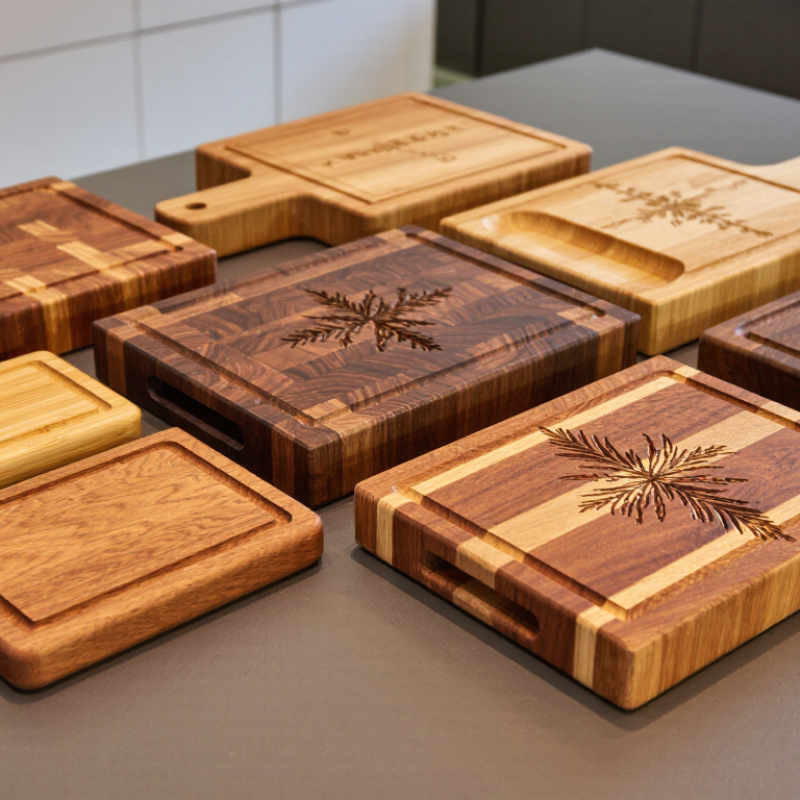
Each type serves a different purchasing purpose. Acacia boards offer warm grain and strong visual appeal. Bamboo boards can provide a lighter, practical option. Walnut and maple create a more premium impression, while oak suits rustic kitchens and restaurant-style presentation. Some designs feature names or logos. Others include serving grooves, handles, juice channels, or reversible surfaces. Small details matter.

Real buying decisions are rarely perfect. A deeper engraving may look impressive, yet it can collect residue if the surface is poorly finished. A low-cost board may attract attention, but inconsistent sizing can complicate fulfillment. I have also seen beautiful samples fail during bulk inspection because their color varied significantly. That lesson deserves attention. Reliable suppliers should explain material sourcing, moisture control, finishing methods, engraving tolerances, and quality checks clearly. Buyers should request physical samples before confirming large orders and review care instructions for the target market. Wood movement is natural. It cannot be eliminated completely.

The following overview compares ten practical board styles by appearance, usability, customization potential, maintenance needs, and commercial value. It is designed to help international buyers make informed choices without relying on photographs alone. A board should look good. It should also perform safely, consistently, and honestly in everyday kitchens.
Top 10 Engraved Chopping Board Types for Global Buyers

Definition and Functional Scope of Engraved Chopping Boards

An engraved chopping board is a food-preparation surface with a carved or laser-marked design. The mark may show a name, logo, measurement guide, food category, or serving instruction. Its functional scope extends beyond decoration. It supports identification, portion control, gift personalization, and visual organization in kitchens, catering areas, and hospitality settings.

Food safety defines its limits. The World Health Organization’s 2015 foodborne disease burden report estimated 600 million illnesses and 420,000 deaths annually. Therefore, an engraved board still requires correct cleaning and separation practices. Guidance from the United States Department of Agriculture recommends separate boards for raw meat, poultry, seafood, and ready-to-eat foods. Engraving does not replace sanitation.

Material selection matters greatly. Hardwood can offer durability and a warm tactile surface, while food-grade plastic may simplify commercial cleaning. Deep engraving can trap moisture, pigments, and food residue. A decorative groove can become a hygiene problem. Buyers should review engraving depth, surface finish, moisture resistance, and cleaning instructions. The Global Household and Kitchenware market analyses published by Grand View Research identify durability and design functionality as continuing purchase considerations. However, engraved boards are not automatically premium products. Poorly finished edges, unclear symbols, or excessive carving can reduce usability, even when the appearance seems attractive.

Classification by Material, Shape, and Engraving Technique

Engraved chopping boards sell best when material, shape, and technique match the buyer’s use case. Grand View Research reported that the global kitchenware market reached approximately USD 62 billion in 2023, with home cooking supporting demand for practical, personalized products. For global buyers, ten useful types include bamboo rectangles, acacia ovals, walnut squares, beech round boards, rubberwood serving boards, teak paddle boards, edge-grain butcher blocks, end-grain blocks, slate-inlay boards, and recycled-wood boards. Material affects hardness, weight, moisture resistance, and maintenance. Bamboo feels light and uniform, while walnut offers darker contrast for fine lettering.

Shape also changes handling. Rectangular boards suit daily preparation and shipping efficiency. Round boards support serving, while paddle forms add visual appeal but may waste storage space. The 2024 kitchenware market analysis by Fortune Business Insights valued the sector above USD 60 billion, indicating strong competition for products that combine utility and personalization. Yet, not every attractive board is practical. Thin decorative pieces can warp. I have seen beautiful engravings become difficult to clean.

Engraving technique requires equal care. Laser engraving creates precise logos, names, and shallow patterns, while CNC carving produces deeper textures and stronger tactile detail. Rotary engraving suits bold lettering but may leave rough edges. The FDA Food Code requires food-contact surfaces to be smooth, durable, and easily cleanable, so deep grooves deserve careful testing. Buyers should request samples, moisture checks, finish details, and care instructions. A board can look premium in photographs and still fail during repeated washing. Surface consistency matters more than ornament.

Top 10 Engraved Chopping Board Types for Global Buyers

Classification by material, shape, and engraving technique

The chart compares representative typical thickness ranges for ten commonly offered engraved chopping-board types. Wooden boards generally use laser, CNC, or hand engraving, while slate and glass products are commonly decorated through laser marking or surface etching. Actual specifications vary according to construction, intended use, and regional food-contact requirements.

Top 10 Engraved Chopping Board Types for Global Buyers

Global buyers can choose from ten practical engraved chopping board types: hardwood, bamboo, acacia, walnut, maple, edge-grain, end-grain, serving, folding, and restaurant-grade boards. Each type suits a different purchasing goal. Hardwood boards provide strength and a warm appearance. Bamboo offers light weight and quick drying. Acacia gives varied grain patterns and strong visual appeal. Walnut looks refined, while maple provides a clean, pale surface.

Edge-grain boards balance durability and cost. End-grain boards resist knife marks better, although they are heavier and usually more expensive. Serving boards combine food preparation with presentation, making them useful for hospitality projects.

Folding boards save storage space in smaller kitchens. Restaurant-grade boards need stable construction, smooth edges, and clear care instructions. Deep engraving looks impressive, but it can trap moisture and food particles.

Material quality matters more than decoration. Buyers should check moisture resistance, board thickness, sanding quality, and engraving depth. Food-safe finishes are essential. A smooth underside also prevents movement during cutting. I have found that overly detailed artwork can reduce readability after repeated washing. Simple names, dates, or line drawings often perform better. A ranking is never perfect, because climate, shipping conditions, and customer habits change the result. Manufacturers should test samples under real cleaning routines before confirming large orders. Even attractive boards may fail when packaging is weak. That practical detail is easy to overlook.

Selection Criteria for Household, Hospitality, and Promotional Use

Selecting an engraved chopping board depends on where it will work, not only how it looks. For household kitchens, buyers should check food-contact suitability, stable construction, and a surface that resists excessive cracking. Hardwood and bamboo can offer practical durability, but the grain, moisture content, and finish still matter. Engraving should be clear without becoming deep enough to trap food residue.

Keep the surface shallow.

Hospitality buyers need stricter control. Board size should match prep stations, storage shelves, and staff handling habits. A board used for vegetables may need different identification from one used for raw proteins. Color markers, engraved labels, or separate board sets can reduce confusion, but engraving alone cannot replace cleaning procedures. Ask about cleaning instructions, oil maintenance, replacement timing, and whether the product suits commercial washing methods. Many wooden boards should not enter high-heat dishwashers.

Promotional buyers face another balance. The engraving must remain readable at the final viewing distance, especially on uneven grain. Logos, names, and short messages usually perform better than crowded artwork. Check proof samples before ordering large quantities. Also review packaging strength, delivery protection, and consistency between production batches. A low price can hide weak edges or uneven engraving. I would not promise permanent color or unlimited service life without material testing and care guidance. That limitation may sound less attractive, yet it makes the purchase more reliable. Some boards look impressive online, but their weight and maintenance demands surprise users. Feedback from kitchens and recipients should influence the next order.

Top 10 Engraved Chopping Board Types for Global Buyers - Selection Criteria for Household, Hospitality, and Promotional Use

Reference ranges are typical market specifications and may vary according to manufacturing tolerances, wood grading, engraving depth, and finishing requirements.
Rank Board Type Typical Size Typical Thickness Common Material Engraving Compatibility Key Selection Criteria Best Use Care Requirements Relative Cost
1 End-Grain Hardwood Board 35–45 × 25–35 cm 4–7 cm Maple, beech, walnut, or mixed hardwood Excellent for deep laser or CNC engraving; high contrast on lighter wood Check weight, block stability, flatness, and food-safe finish Premium household kitchens and professional food presentation Hand wash, dry immediately, and oil periodically High
2 Edge-Grain Hardwood Board 30–45 × 20–30 cm 2–4 cm Beech, maple, acacia, or walnut Very good for laser engraving and shallow CNC designs Select straight grain, low warp risk, rounded edges, and stable construction Daily household use and upscale gift sets Hand wash only; re-oil when the surface appears dry Medium–High
3 Bamboo Laminated Board 30–40 × 20–30 cm 1.5–2.5 cm Pressed bamboo strips Good for laser engraving; light surface provides clear contrast Verify adhesive quality, low formaldehyde compliance, and smooth lamination Household use, eco-themed merchandise, and volume promotions Do not soak or machine wash; dry both sides after cleaning Low–Medium
4 Acacia Serving Board 30–50 × 15–25 cm 1.5–3 cm Solid or laminated acacia wood Suitable for laser engraving; natural grain creates varied visual results Review grain consistency, handle strength, moisture content, and edge finishing Charcuterie, hospitality presentation, and premium promotional gifts Hand wash and dry promptly; avoid prolonged contact with acidic foods Medium
5 Personalized Paddle Board 35–55 × 15–25 cm 1.5–2.5 cm Beech, maple, acacia, or rubberwood Excellent for names, dates, monograms, and simple line artwork Assess handle ergonomics, hanging hole size, usable engraving area, and balance Weddings, housewarming gifts, cafés, and event promotions Hand wash only; keep the handle and hanging hole dry Medium
6 Rubberwood Finger-Joint Board 30–40 × 20–30 cm 1.5–2.5 cm Laminated rubberwood Good for laser engraving, especially with a uniform light finish Confirm food-contact adhesive, joint alignment, sanding quality, and odor control Cost-conscious household programs and large promotional orders Avoid dishwashers and standing water; apply food-safe mineral oil as needed Low–Medium
7 Recycled Plastic Cutting Board 30–45 × 20–30 cm 0.8–2 cm High-density polyethylene or polypropylene Suitable for laser marking or molded graphics; contrast depends on surface color Check food-contact compliance, stain resistance, dishwasher rating, and warping Commercial kitchens, outdoor use, and practical promotional campaigns Often dishwasher-compatible when specified; replace after deep scoring Low–Medium
8 Tempered Glass Chopping Board 30–40 × 20–30 cm 0.4–0.6 cm Tempered soda-lime glass Best for printed or etched designs; direct engraving requires suitable equipment Review edge safety, anti-slip feet, heat resistance, and breakage packaging Decorative kitchens, hospitality displays, and image-led promotions Easy to clean; avoid sudden thermal shock and impact on edges Medium
9 Slate Serving and Chopping Board 25–40 × 15–25 cm 0.5–1 cm Natural slate Good for engraving, sandblasting, or laser marking with a contrasting finish Check thickness uniformity, exfoliating edges, surface sealing, and packaging protection Restaurant serving, cheese presentation, and premium event gifts Hand wash and dry; do not use abrasive cleaners or microwave ovens Medium–High
10 Cork-Backed Composite Board 30–40 × 20–30 cm 0.8–1.5 cm Wood-fiber composite with cork backing Suitable for laser marking; graphics are usually sharp on the smooth top layer Verify food-contact certification, delamination resistance, cork adhesion, and heat tolerance Lightweight promotional merchandise and occasional household use Hand wash only; keep the cork backing away from prolonged moisture Low–Medium
Global Buyer Checklist: Confirm food-contact compliance, applicable import requirements, moisture content, finish safety, engraving artwork tolerances, packaging protection, minimum order quantity, and care instructions before placing an order.

International Sourcing, Quality Control, and Compliance Considerations

Top 10 Engraved Chopping Board Types for Global Buyers

International buyers should evaluate engraved boards by material, construction, and intended use. Common types include bamboo, acacia, beech, walnut, rubberwood, edge-grain, end-grain, serving, paddle, and custom-shaped boards. Each type needs a different inspection plan. Bamboo may show uneven bonding, while hardwood boards can develop small cracks during dry transport. These details affect safety, appearance, and customer satisfaction.

For food-contact products, suppliers should provide material specifications, coating details, and production records. Buyers should request samples before placing large orders. Inspect engraving depth, smoothness, odor, warping, glue lines, and surface splinters. The engraved area must remain easy to clean. Deep lettering can trap food particles. That is a practical concern.

Compliance requirements vary by destination. Confirm applicable food-contact rules, chemical limits, labeling duties, packaging standards, and documentation requirements before production. Independent laboratory testing can help verify coating migration, heavy metals, and formaldehyde where relevant. Packaging should protect corners and prevent moisture damage. Traceable batch codes are useful when a quality issue appears. They are not perfect, but they improve accountability.

Tips: Compare three production samples, not one. Photograph defects under clear lighting. Define acceptable limits in writing. Ask how timber is sourced and dried. Review certificates carefully, because a certificate may cover a different material or factory. A small pre-shipment inspection often prevents expensive returns.

FAQS

What should household buyers check before choosing an engraved chopping board?

Check food-contact suitability, stable construction, and resistance to cracking. Hardwood and bamboo can be durable choices. Grain, moisture content, and finish still matter. The engraving should stay shallow and easy to clean.

Why should engraved lettering remain shallow?

Deep lettering can trap food particles and moisture. Shallow engraving is easier to wipe and inspect. Keep it shallow. A beautiful design is not useful if cleaning becomes difficult.

What matters when buying boards for hospitality kitchens?

Match the board size with prep stations, storage shelves, and staff habits. Use clear labels or separate sets for different ingredients. Engraving supports identification, but it never replaces cleaning procedures.

Can wooden boards enter a high-heat dishwasher?

Many wooden boards should not enter high-heat dishwashers. Ask about approved cleaning methods before purchase. Also confirm oil maintenance and replacement timing. Care instructions are easy to overlook.

Which materials and constructions need careful inspection?

Common options include bamboo, acacia, beech, walnut, rubberwood, edge-grain, and end-grain boards. Bamboo may have uneven bonding. Hardwood may develop small cracks during dry transport. Check grain, glue lines, and surface splinters.

What should promotional buyers confirm before placing a large order?

Request proof samples and check readability at the final viewing distance. Short messages usually work better than crowded artwork. Review packaging strength, edge quality, and engraving consistency. Test before scale.

What quality checks should international buyers perform?

Compare at least three production samples, not one. Inspect warping, odor, engraving smoothness, and coating details. Photograph defects under clear lighting. Define acceptable limits in writing.

What compliance and documentation should buyers request?

Confirm applicable food-contact rules, chemical limits, labeling duties, and packaging standards. Request material specifications, coating details, and production records. Independent testing may verify migration, heavy metals, or formaldehyde where relevant. Certificates can be misleading if they cover another material or factory.

How can buyers reduce damage during delivery?

Packaging should protect corners and prevent moisture damage. Ask for traceable batch codes for future quality investigations. A small pre-shipment inspection can prevent expensive returns. It is not perfect, but it improves accountability.

Conclusion

An Engraved Chopping Board combines everyday food-preparation function with personalized visual appeal. This article explains its practical scope and compares board types by material, shape, size, edge design, and engraving technique, including laser engraving, carving, and inlaid details. It presents the top 10 Engraved Chopping Board options for global buyers, ranging from durable hardwood and bamboo boards to lightweight composite, acacia, walnut, serving-style, reversible, and custom promotional designs. Each type is evaluated for usability, maintenance, appearance, and suitability for different purchasing goals.

The guide also outlines selection criteria for households, hospitality businesses, and promotional programs, considering food-contact safety, durability, moisture resistance, engraving clarity, packaging, and order volume. For international sourcing, buyers should review supplier capabilities, material traceability, production consistency, inspection procedures, labeling, packaging protection, and destination-market compliance requirements. These considerations help purchasers balance design value, performance, cost, and reliable delivery.

Aria

Aria

Aria is a dedicated marketing professional with a deep passion for innovative strategies and a keen understanding of our company's product offerings. With a wealth of experience in the industry, Aria excels at crafting engaging content that highlights the unique features and benefits of our......