Top 10 Chopping Board Set Suppliers for Global Buyers

Time:2026-10-05 Author:Isabella
0%

A Chopping Board Set looks simple on a kitchen counter, yet global sourcing decisions are rarely simple. Buyers must compare wood, bamboo, plastic, composite materials, knife safety, packaging, and cleaning performance. A low price can hide uneven surfaces, weak handles, or short product life. Small details matter.

Grand View Research estimates that the global kitchenware market will continue expanding through the decade, supported by home cooking, hospitality demand, and organized retail. The Business Research Company also reports steady growth across kitchenware categories, although cutting boards are not always measured separately. This limitation deserves attention. Market figures can guide planning, but they cannot replace factory audits, sample testing, and supplier verification.

Food-safety expert Dr. Benjamin Chapman has repeatedly emphasized the importance of preventing cross-contamination between raw and ready-to-eat foods. His practical message is clear: “Use separate cutting boards for raw meat and ready-to-eat foods.” That principle should influence every Chopping Board Set specification, from color coding to dishwasher compatibility. A red board for raw poultry and a green board for vegetables makes the system visible in a busy kitchen.

This guide examines ten suppliers serving global buyers. It considers material consistency, production capacity, customization, certifications, export experience, and after-sales reliability. Some suppliers may appear stronger on paper. Not always in practice. Samples, factory communication, and documented quality controls still reveal the real difference.
Top 10 Chopping Board Set Suppliers for Global Buyers

Chopping Board Set Suppliers: Product Types and Global Market Scope

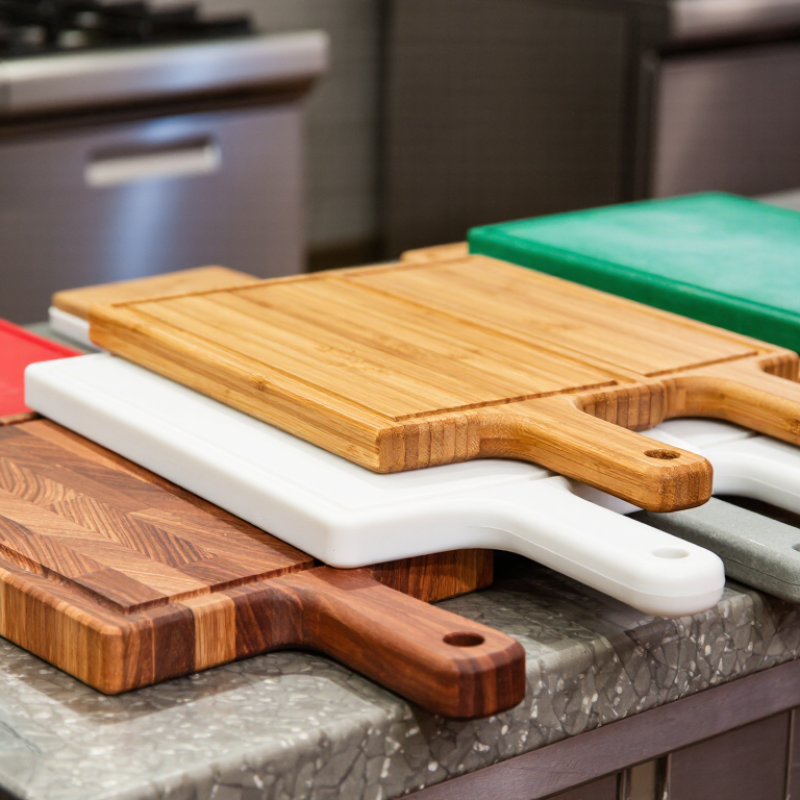
Chopping board set suppliers serve different global buying needs, from household packs to professional kitchen assortments. Common product types include bamboo boards, acacia boards, plastic boards, and layered composite boards. Sets may include one large board, several color-coded boards, storage stands, or matching knives. Material choice affects weight, moisture resistance, maintenance, and shipping cost. Bamboo feels light and clean, while hardwood offers a warmer appearance and heavier cutting surface.

For global buyers comparing the top 10 chopping board set suppliers, product consistency matters as much as design. Ask for material details, board thickness, edge finishing, packaging photos, and recent sample results. A reliable supplier should explain production capacity, inspection steps, lead times, and export experience. Check whether the boards remain flat after washing and whether handles feel secure. I once underestimated packaging strength; several corners arrived chipped. That mistake changed how I assess carton testing and pallet protection.

Tips: Request samples from three suppliers before placing a larger order. Compare odor, surface smoothness, drainage, and engraving accuracy. Confirm carton dimensions early, because oversized packaging can increase freight charges. Buyers should also review food-contact documentation for the destination market. Requirements differ across regions, and assumptions create delays. A supplier with clear records is usually easier to manage, even when its quotation is not the lowest. Supplier communication also matters. Slow replies may become costly during seasonal demand.

Key Criteria for Evaluating International Chopping Board Suppliers

International buyers should evaluate chopping board suppliers beyond catalog photos and low quotations. Start with material clarity. Ask whether the board uses bamboo, hardwood, recycled plastic, or a composite material. Request species details, moisture-control procedures, and food-contact test reports for the destination market. A board measuring 30 by 40 centimeters may look suitable, yet warping can appear after repeated washing. Samples reveal defects.

Inspect manufacturing consistency through factory audits, production records, and batch inspections. Check the board’s thickness, edge finishing, surface smoothness, and odor after unpacking. For plastic products, confirm color stability and resistance to knife marks. For wooden products, examine glue lines, cracks, and uneven grain. Look beyond price. A cheaper offer may hide weaker packaging or unstable raw materials.

Reliable suppliers provide clear minimum order quantities, sample timelines, and realistic production schedules. They should explain carton dimensions, pallet loading, labeling, and export documentation without vague promises. Traceability matters when a buyer needs to identify a production batch months later. Communication quality is also practical evidence of professionalism. Slow replies can become costly during seasonal demand. Still, no supplier is flawless; even a well-organized factory may miss a small surface defect. Buyers should define acceptable limits in writing, use independent inspections when volumes grow, and review performance after each shipment.

Top 10 Chopping Board Set Suppliers by Products and Capabilities

Choosing among the top 10 chopping board set suppliers requires more than comparing prices. Their product ranges reveal their real capabilities. Some focus on bamboo sets with juice grooves, while others produce acacia, rubberwood, plastic, or layered composite boards. A dependable supplier should offer several sizes, stable thicknesses, non-slip feet, and smooth, food-contact surfaces. Details matter.

The strongest suppliers can support custom colors, laser markings, gift boxes, and retail-ready packaging. They should also explain moisture control, glue selection, edge finishing, and cleaning guidance clearly. During supplier evaluations, buyers should request material samples, packaging tests, and recent inspection records. A sample that arrives warped after humid storage is a warning sign. Production capacity matters too. A supplier may handle 500 sets well but struggle with 20,000.

Capabilities also differ by business model. Some suppliers specialize in handmade kitchen sets and flexible small orders. Others operate automated lines for consistent dimensions and faster replenishment. Export experience, quality-control procedures, and communication speed can separate a reliable partner from a temporary vendor. Ask for defect tolerances, replacement policies, and lead-time evidence. No ranking is permanent. Raw material prices change, equipment improves, and a supplier’s performance may vary between batches. One weakness remains common: attractive catalogs sometimes provide limited technical data. Buyers should verify claims through samples, factory documentation, and repeat orders before making a long-term decision.

Comparison of Pricing, Quality, Certifications, and Customization Options

Top 10 Chopping Board Set Suppliers for Global Buyers

When comparing ten chopping board set suppliers, pricing should be reviewed beyond the quoted unit cost. A low offer may exclude packaging, tooling, inspection, or shipping preparation. In our sourcing experience, bamboo, acacia, and food-grade plastic sets show different cost patterns. Thicker boards usually cost more, but they resist warping better. Check moisture content, edge sanding, surface flatness, and odor after washing. Small details matter. Ask for samples from the same production batch. Product photos can hide uneven joints or rough corners. A reliable supplier should explain lead times, replacement policies, and quality-control records clearly.

Certifications require careful verification. Food-contact test reports should match the exact material and intended market. ISO 9001 can support process consistency, but it does not prove product safety by itself. For wooden boards, buyers may also request sustainable-material documentation and fumigation records where applicable. Customization options often include laser logos, sleeve packaging, color labels, set quantities, and private carton designs. Confirm artwork limits, sample charges, minimum order quantities, and mold fees before approval. Communication quality is part of supplier quality. Delayed answers often become delayed production. However, no shortlist is perfect. We have seen attractive samples fail during repeated washing tests. A stronger assessment combines laboratory documents, factory evidence, sample testing, and realistic landed-cost calculations. Price still matters, but the cheapest board may create higher returns, complaints, and replacement expenses.

How Global Buyers Can Select and Purchase from the Right Supplier

Top 10 Chopping Board Set Suppliers for Global Buyers

Global buyers should judge suppliers beyond catalog photos and low quotations. The right partner proves material safety, production consistency, and shipment discipline. The FDA Food Code 2022 recommends food-contact surfaces that are smooth, durable, and easily cleanable. Ask for material specifications, migration test reports, factory audit records, and recent batch photos. Do not accept “food grade” as enough evidence.

Check the board’s real construction. HDPE and polypropylene usually support commercial cleaning, while bamboo and rubberwood require careful moisture control. The U.S. Department of Agriculture advises replacing boards with deep grooves that are difficult to clean. Request samples and test warping after washing, drying, and repeated knife use. It sounds basic. It is often missed.

Purchase decisions should include MOQ, defect tolerance, packaging strength, production capacity, and delivery history. The International Trade Centre’s Trade Map data can help buyers compare import values and supplier-country trends before negotiating. Compare landed cost, not only factory price. Include inspection checkpoints before shipment. ISO 9001 certification may indicate process control, but it does not replace product testing. I would also question unusually perfect inspection records; real factories have occasional defects. The supplier’s response to a failed sample often reveals more than its sales presentation.

Top 10 Chopping Board Set Suppliers for Global Buyers - How Global Buyers Can Select and Purchase from the Right Supplier

Rank Anonymized Supplier Profile Recommended Material Focus Typical Set Configuration Indicative MOQ Indicative Production Lead Time Key Compliance Evidence to Request Best Fit for Global Buyers Purchase Risk to Check
1 FSC-Chain-of-Custody Wood Supplier Bamboo, rubberwood, or hardwood with documented legal sourcing 3–5 boards, storage stand, optional utensils 500–1,000 sets 30–50 days after approved sample Chain-of-custody certificate, food-contact test report, wood-treatment declaration, factory audit Retailers requiring traceable and renewable materials Moisture content, warping, glue safety, and certificate scope
2 Premium Hardwood Specialist Acacia, beech, maple, or walnut 2–4 thick boards with juice groove and handles 300–800 sets 35–60 days after approved sample Species identification, legal-harvest documents, coating declaration, food-contact migration testing Premium kitchenware and gift channels Color variation, cracks, knots, dimensional tolerance, and finish consistency
3 Food-Contact Plastic Injection Molder Polypropylene or high-density polyethylene 3–4 color-coded boards with non-slip edges 1,000–3,000 sets 25–45 days after tooling approval Food-contact declaration, migration test, resin specification, material safety data, quality-control plan High-volume supermarkets and food-service distributors Odor, staining, knife marks, warpage, and recycling claims
4 Silicone-Grip Board Set Supplier Polypropylene or wood boards with silicone feet or edging 3 boards, color coding, hanging holes, or rack 800–1,500 sets 35–55 days after sample confirmation Silicone composition report, food-contact test, odor test, adhesion test, dimensional inspection Buyers prioritizing stability and countertop protection Silicone detachment, heat resistance, cleaning durability, and color transfer
5 Rubberwood Kitchenware Manufacturer Solid rubberwood and laminated rubberwood 2–3 boards with serving tray or utensil holder 500–1,200 sets 30–50 days after approved sample Formaldehyde-emission test where applicable, adhesive specification, food-contact finish report, kiln-drying record Mid-market housewares and hospitality buyers Glue-line separation, mold prevention, moisture variation, and surface roughness
6 Recycled-Content Plastic Supplier Recycled plastic blended with virgin food-contact resin where required 2–4 boards with packaging designed for recycling 1,500–5,000 sets 30–50 days after material approval Recycled-content verification, food-contact assessment, contaminant testing, batch traceability Sustainability-led retailers and online marketplaces Inconsistent color, odor, contamination, and unsupported environmental claims
7 Private-Label OEM Set Manufacturer Wood, plastic, or mixed-material construction Buyer-defined sizes, colors, packaging, and accessories 500–2,000 sets 40–70 days including artwork and packaging approval Factory capability audit, bill of materials, inspection standard, packaging test, social-compliance audit Importers launching customized product lines Tooling ownership, artwork errors, component substitution, and change control
8 Hospitality-Grade Bulk Supplier High-density plastic, laminated wood, or composite materials 2–3 large boards with commercial-use packaging 2,000–10,000 sets 20–40 days for repeat designs Commercial-use durability test, sanitation instructions, food-contact documentation, carton drop test Hotels, restaurants, caterers, and institutional buyers Cleaning-cycle performance, replacement availability, and carton damage
9 Eco-Fiber Composite Supplier Wood fiber, paper fiber, or plant-fiber composite 2–3 lightweight boards with compact packaging 1,000–3,000 sets 35–60 days after material validation Material composition, food-contact migration test, heat and moisture resistance, disposal guidance Buyers seeking lightweight alternatives to solid wood Delamination, swelling, misleading compostability claims, and heat limits
10 Fast-Replenishment Stock Supplier Standard bamboo, wood, or plastic designs held in finished-goods inventory 2–4 ready-to-ship boards with standard packaging 100–500 sets 7–20 days subject to available inventory Current batch test reports, inventory record, packaging specification, pre-shipment inspection Small importers, trial orders, and urgent replenishment Aged inventory, mixed batches, stock accuracy, and limited customization
Buyer-use note: MOQ and lead-time figures are practical indicative ranges for international sourcing and must be confirmed through a written quotation, approved pre-production sample, inspection plan, and applicable destination-market compliance review. Certification and test documents should be verified for the exact material, factory, product model, and production batch.

FAQS

What types of chopping board sets are commonly available?

Common options include bamboo, hardwood, plastic, and layered composite boards. Sets may include one board, several boards, a stand, or matching knives. Material affects weight, moisture resistance, maintenance, and shipping cost.

Which material suits different purchasing needs?

Bamboo feels light and clean, making it practical for many household sets. Hardwood offers a warmer appearance and a heavier cutting surface. Plastic often supports frequent commercial cleaning. Each material still needs testing.

What should buyers request before placing an order?

Request material details, board thickness, edge-finishing information, and packaging photographs. Ask for recent samples and food-contact documentation for the destination market. Do not accept vague “food-safe” statements as complete evidence.

How can buyers test sample quality?

Wash, dry, and use each sample repeatedly. Check whether the board stays flat afterward. Inspect surface smoothness, odor, drainage, glue lines, cracks, and knife marks. Small defects matter.

How many suppliers should buyers compare?

Request samples from three suppliers before making a larger purchase. Compare odor, smoothness, drainage, engraving accuracy, and actual dimensions. A catalog photograph cannot show warping after washing.

What packaging details deserve close attention?

Confirm carton dimensions, pallet protection, corner padding, and loading methods early. Oversized cartons can increase freight charges. Weak packaging may cause chipped corners during transit. I learned this the hard way.

Which supplier records are useful for international purchasing?

Review production capacity, inspection procedures, batch records, lead times, and export experience. Traceability helps identify a production batch months later. Recent batch photographs can reveal consistency better than polished catalog images.

How should buyers compare supplier prices?

Compare landed cost, not only the factory quotation. Include packaging, freight, inspections, duties, and possible defect losses. A cheaper offer may use weaker cartons or unstable raw materials. Low price is not proof of value.

What order and delivery terms should buyers confirm?

Confirm minimum order quantity, sample timing, production capacity, and delivery history. Set acceptable defect limits in writing before production starts. Add inspection checkpoints before shipment. Promises can sound better than schedules.

Can even organized suppliers make mistakes?

Yes. A factory may still miss a small surface defect. Buyers should review every shipment and record recurring problems. The response to a failed sample can reveal real professionalism. No process is perfect.

Conclusion

This guide presents a practical overview of the global Chopping Board Set supplier market, covering product types such as wood, bamboo, plastic, composite, and multi-piece kitchen sets. It explains how buyers can evaluate international suppliers by examining material quality, manufacturing capacity, food-contact safety, production consistency, packaging, delivery performance, and after-sales support. The article also introduces ten supplier profiles organized by product strengths and business capabilities, without focusing on brand names, helping readers understand the differences between standard, premium, and customized offerings.

In addition, the guide compares pricing structures, quality levels, certifications, minimum order quantities, lead times, and customization options, including sizes, colors, logos, packaging, and set combinations. Global buyers will learn how to shortlist suitable suppliers, verify samples and documentation, negotiate commercial terms, manage shipping requirements, and build reliable long-term purchasing relationships. The goal is to support informed sourcing decisions and help buyers select a Chopping Board Set supplier that matches their market needs, budget, quality expectations, and distribution plans.


Isabella

Isabella

Isabella is a dedicated marketing professional with a sharp focus on driving brand growth and engagement through strategic content creation. With an extensive background in digital marketing, she combines her passion for storytelling with her keen understanding of industry trends to deliver......