A Kitchen Chopping Block is more than a flat surface. It affects how comfortably you prep vegetables, slice bread, or portion meat. A board that slides across the counter can make simple tasks frustrating. Too small, and ingredients spill onto the worktop. Too large, and washing and storage become a chore. Small details matter.
Choosing well starts with the way you cook. Measure your available counter space, then consider the foods you prepare most often. Wood can feel gentle under a knife, but it needs suitable cleaning and regular care. Plastic is often lighter and easy to handle, though deep cuts can become difficult to clean thoroughly. No material is perfect. That is worth remembering.
Look for a stable board with enough room for a chef’s knife and a small pile of chopped ingredients. A juice groove may help contain tomato or meat juices, but it is not essential for every kitchen. Check the board’s weight, thickness, and care instructions before buying. If you plan to use one board for raw meat and ready-to-eat foods, think carefully about cleaning and cross-contamination; separate boards can make that routine clearer. There is no single best choice for everyone. The right one fits your kitchen, habits, and willingness to maintain it. This guide compares practical features so you can choose with confidence—and avoid paying for details you may never use.
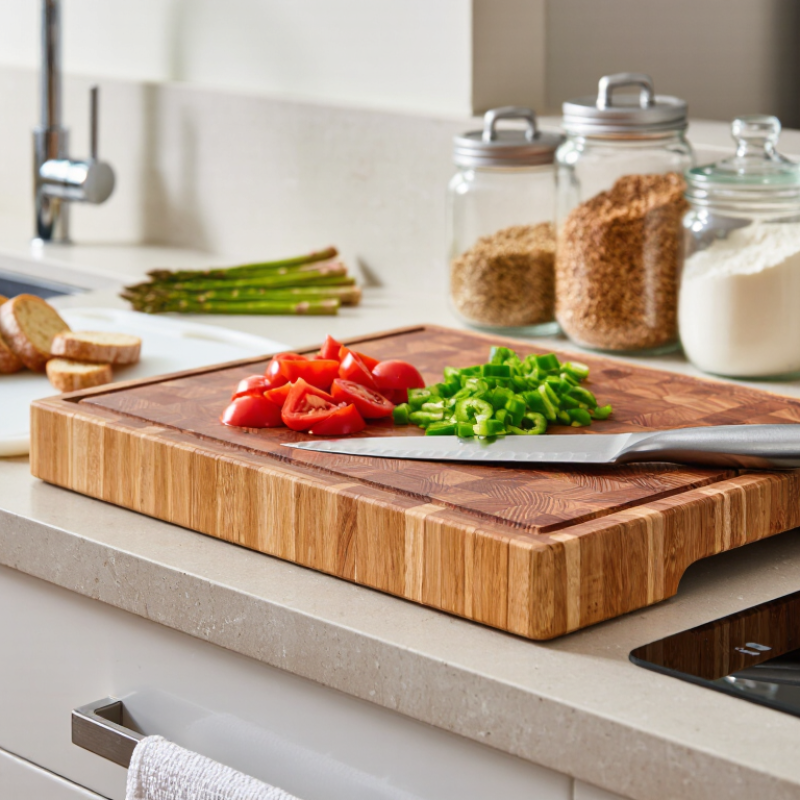
Before choosing a kitchen chopping block, measure the counter space you can actually use. Include nearby appliances, the sink, and the room needed to move a knife safely. A tape measure is more reliable than guessing from a product photo. Leave a little clear counter around the board, so bowls and ingredients have somewhere to go. Small boards wander. If your counter is narrow, a board that fills it may feel useful at first but leave no room for a plate or mixing bowl. Check cabinet or drawer dimensions too, especially if the board is thick or heavy.
Match the surface area to the food you regularly prepare. Chopping one onion or slicing a lemon takes little room; breaking down a squash or prepping vegetables for several meals needs more. A board around 12 by 18 inches suits many everyday tasks, but your workspace and habits matter more than a standard size. If you cook in batches, choose the largest board that still leaves comfortable clearance. A heavy block can stay put during chopping, yet it may be awkward to lift and clean. That trade-off is easy to overlook. Measure before shopping. Then picture the board beside your sink, not just on an empty counter.
Wood, plastic, and composite boards affect both knife edges and daily upkeep. Wood is relatively gentle on blades, but it needs prompt washing and thorough drying; standing water can warp it. I prefer a stable, thick board that does not slide when chopping. Plastic is light and often dishwasher-safe, but deep knife grooves are hard to clean. Replace it when cuts become pronounced. Composite boards vary: check the maker’s care instructions, since some tolerate dishwashers and others do not. Not every “easy-care” surface feels kind to a sharp edge.
Food hygiene matters, too. The CDC estimates that foodborne illnesses cause 48 million illnesses, 128,000 hospitalizations, and 3,000 deaths in the United States each year. USDA FSIS recommends separate boards for raw meat and ready-to-eat foods. A Journal of Food Protection study by Ak, Cliver, and Kaspar (1994) found that bacteria could remain in knife cuts on plastic boards after washing; results also showed that bacteria were difficult to recover from wood surfaces. That does not make wood automatically safer. Wash each board promptly with hot, soapy water, and sanitize when appropriate. I have sometimes kept a board past its best; those grooves are easy to underestimate. Choose a material you can clean consistently, and keep your knife away from glass, stone, and other hard surfaces.
A kitchen chopping block should make safe food preparation easier, not just look sturdy on the counter. The USDA advises using separate cutting boards for raw meat, poultry, and seafood, and another for produce and ready-to-eat foods. A dedicated board helps prevent juices from raw ingredients reaching lettuce, bread, or sliced fruit. CDC estimates that about 1 in 6 people in the United States gets sick from foodborne illness each year. That figure covers many causes, not cutting boards alone, but it shows why everyday handling habits matter.
Choose a nonporous surface that feels stable under a knife and fits your sink or dishwasher. Keep one board for raw animal foods and another for produce. After cutting raw meat, wash the board with hot, soapy water; sanitize it when appropriate, and let it dry fully. Deep grooves can hold residue, so replace a board when it becomes heavily worn. It is easy to mix boards up during a rushed dinner. That small mistake deserves attention.
Tips: Mark each board with a simple label or distinct handle color. Store them separately, not stacked together while wet. Wash your hands and the knife between tasks, too. A separate board helps, but it cannot replace careful cleaning.
A chopping block should feel steady under a knife and be simple to wash thoroughly. Choose a surface without deep grooves or cracks, where food residue can hide. Wood and nonporous plastic can both work; the best choice is one you’ll clean and dry carefully. Keep raw meat and ready-to-eat foods apart, using separate boards when possible. Small details matter.
Tips: Wash the board with hot, soapy water after each use, especially after cutting raw meat, poultry, or seafood. Rinse it well and let it air-dry. If the board has deep cuts, replace it. I sometimes rush the drying step; it’s worth slowing down.
The USDA danger zone is 40–140°F, where bacteria can multiply quickly. Don’t leave perishable food on the counter or chopping block for more than two hours. If the room is above 90°F, such as beside a hot grill, limit that time to one hour. Set a timer if meal prep gets busy. After cutting, move food into the refrigerator promptly, and clean the block before using it for salad, bread, or fruit. A clean-looking surface isn’t always clean.
A chopping block should stay put when a knife meets a firm carrot or squash. Set it on a dry counter and press down at each corner; rocking or sliding is a warning. A damp towel underneath can improve grip, but it should not excuse an unstable design. Check the block’s thickness, weight, and construction. Dense wood or a well-made composite can handle regular chopping, though every material needs suitable care. Look for smooth surfaces without deep cracks or rough seams where food scraps may collect.
Tips: Read the care instructions before buying. Confirm that the maker identifies the surface as suitable for food contact, and check what cleaning methods it allows. If that information is missing, choose a clearer option. Also consider whether the block fits your sink and storage space.
Durability depends on more than thickness. A block that stays wet may warp, split, or develop persistent odors, so drying and storage matter. Wood may need occasional conditioning, while some composite surfaces tolerate more frequent washing. Neither is maintenance-free. One detail is easy to overlook: a very large block can feel reassuring in a shop, then crowd a small counter at home. Measure your workspace, and inspect the edges and underside for a level finish before choosing.
Keep one board for raw meat, poultry, or seafood, and another for produce and ready-to-eat foods. This helps prevent raw juices from reaching sliced fruit or bread.
Choose a stable, washable surface without deep grooves or cracks. Wood and nonporous plastic can both work with proper care.
Place it on a dry counter and press each corner. If it rocks or slides, choose another board. A damp towel may improve grip, but it cannot fix an unstable design.
Wash it with hot, soapy water, rinse it well, and let it air-dry fully. Clean the knife and wash your hands between tasks, too. Don’t rush the drying.
Replace it when deep cuts, cracks, or heavy wear make thorough cleaning difficult. Residue can hide in damaged areas.
Keep it out for no more than two hours. In temperatures above 90°F, limit that time to one hour. A timer helps during a busy meal.
Look for clear information that the surface is suitable for food contact. Check its care instructions, too. If details are missing, choose a clearer option.
Measure your counter, sink, and storage space before buying. Dry boards fully and store them separately, rather than stacking them while wet. I sometimes forget that last part.
Choosing the right Kitchen Chopping Block starts with your daily preparation habits and available counter space. Select a size that gives you enough room to work without making the board difficult to store or move. Wood can be gentle on knives but needs careful cleaning and drying; plastic is often easy to wash, while composite boards offer another durable option. Consider how much maintenance each material requires and choose one that fits your routine.
For safer food preparation, use separate boards for raw meat and ready-to-eat foods such as produce, as the USDA advises. Wash boards and utensils thoroughly after use, and keep perishable foods out of the 40–140°F danger zone. Follow the two-hour rule: refrigerate perishable food within two hours, or within one hour when temperatures exceed 90°F. Before buying, check that the board stays stable on your counter, resists wear, and is intended for food contact.

Joywave