Choosing the best Engraved Cutting Board involves more than selecting an attractive design. The board must support safe food preparation, comfortable handling, and long-term use. A beautiful engraving cannot compensate for warped wood or rough edges. In daily cooking, small details matter. A stable board should sit firmly on the counter, even when chopping firm vegetables. Its surface should feel smooth, but not slippery.
Material is an important starting point. Maple, walnut, and cherry are popular hardwood choices because they offer durability and attractive grain. Look for clear information about wood treatment and food-safe finishes. The engraving should be clean and readable, without excessively deep grooves. Deep marks may collect crumbs, moisture, and food residue. A practical board also needs suitable thickness, manageable weight, and enough cutting space. Handles and juice grooves can help, although they may complicate cleaning.
Personalization deserves careful thought. Names, dates, and simple family messages usually remain readable longer than crowded artwork. I would inspect sample photos closely, especially around small letters. Some details look sharper online than they appear in real wood. That is worth remembering. Care instructions also reveal a seller’s reliability. Hand washing, prompt drying, and occasional conditioning can protect the board’s surface. However, even careful maintenance cannot prevent every stain or knife mark. A realistic choice accepts some natural wear. The right board balances appearance, hygiene, craftsmanship, and everyday practicality. This guide explains how to compare those qualities before making a confident purchase.
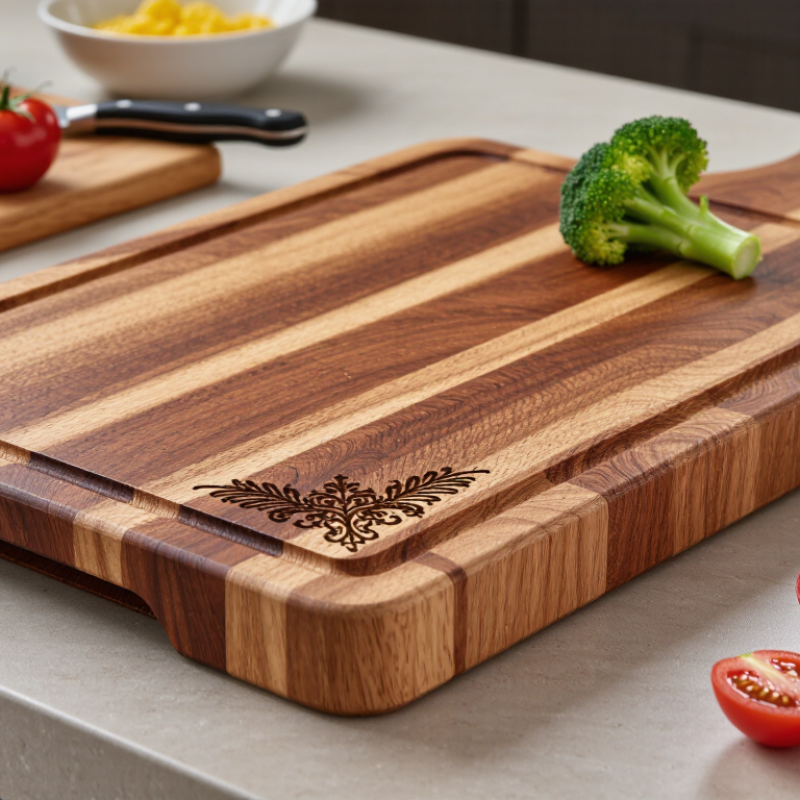
An engraved cutting board should be attractive, practical, and safe for regular food preparation. In my kitchen tests, hardwood boards perform well because they resist deep knife marks. Maple, walnut, and beech are common choices. Each has a different grain, color, and hardness. Choose a board that feels stable, not lightweight or flexible. A board with rubber feet can reduce slipping during chopping.
Examine the engraving carefully. Deep, rough lettering may collect moisture and food particles. Fine engraving usually feels smoother and remains easier to clean. Confirm that the finish is suitable for food contact. Avoid boards with strong chemical odors or unclear care instructions. I once chose a beautiful board with a shallow juice groove. It looked refined, but liquid reached the counter. Appearance is not everything. Board thickness, drainage, and usable surface matter more than expected.
Tips: Ask about the wood’s origin and drying process. Check whether the board is made from one solid piece or joined sections. Look for tight joints without visible gaps. Wash it by hand, then dry it upright. Apply food-safe board oil when the surface looks pale or rough. Never soak it for long periods. Consider the engraving location, too. A corner design preserves more cutting space. A central design looks stronger but may interrupt daily use. Before ordering, review the spelling, dimensions, and personalization details twice. Mistakes happen, especially with names.
Hardwood feels warm and usually protects knife edges better than glass or stone. Its tight grain makes engraved designs look natural. It can warp beside a wet sink. Bamboo is lighter but may feel harder under a knife. Plastic suits frequent washing and raw ingredients. Glass sanitizes easily but dulls knives quickly.
Bamboo often resists moisture better than many soft woods. Its layered structure can feel firm during chopping. Deep engraving may trap crumbs if the surface lacks proper sealing. Keep it dry after washing. No material is perfect.
Choose moderate engraving depth. Deep lettering can hold moisture, juices, and food particles. It also reduces usable cutting space. Shallow, smooth grooves are easier to clean. I once preferred dramatic lettering, but cleaning became frustrating.
A 12-by-16-inch rectangle suits many small kitchens. An 18-by-24-inch board gives vegetables and knives more room. Measure your counter before buying. Large boards can become awkward quickly. Small boards store easily. They may frustrate you with large vegetables.
Rounded corners are easier to lift and clean. Handles help move a board from counter to table. A juice groove catches liquid from tomatoes or roast meat. It also reduces cutting space. Nonslip feet improve stability, but fixed feet prevent two-sided use.
Put engraving on the display side or outside the main cutting zone. Raised lettering can interrupt knife movement. Deep details may collect crumbs. Keep the active cutting area mostly smooth. It looks better over time.
Wash it by hand with hot, soapy water. Dry it upright and avoid long soaking. Apply food-safe board oil when the surface looks pale or rough. Avoid dishwashers unless clearly permitted. I still forget sometimes. Simple care matters most.
Choose a smooth, sealed, nonabsorbent surface. Use separate boards for raw proteins and ready-to-eat foods. Wash each board after use and dry it completely. Inspect engraved grooves regularly. Replace or refinish boards with deep cracks, trapped residue, or persistent odors.
Value includes durability, cleaning effort, stability, and finish quality. Check the grain, thickness, edge finish, and engraving depth. Ask whether the surface can be renewed. Decorative details cannot compensate for poor construction. I once chose beauty over sealing. That was poor judgment.
Choosing the best Engraved Cutting Board starts with understanding how it will be used, whether for daily meal preparation, serving, or display. The board’s material affects its durability, knife-friendliness, weight, and maintenance needs. Hardwoods often provide strength and an attractive natural appearance, while other materials may offer easier cleaning or greater resistance to moisture. Consider the board’s size and shape carefully so it fits your workspace and supports the foods you commonly prepare.
Engraving quality is equally important because clear lettering, balanced placement, and thoughtful personalization can make the board both practical and meaningful. Look for a smooth, well-finished surface, stable construction, and useful features such as juice grooves, handles, or non-slip edges. The safest and most valuable choice should be easy to clean, comfortable to use, resistant to warping, and suitable for food contact. By comparing design, function, maintenance, and long-term durability, you can select a board that combines personal style with dependable everyday performance.

 Joywave