The 2026 market for Standing Cutting Board products is becoming more practical, design-focused, and globally diverse. Buyers now compare more than board thickness or surface appearance. They examine stability, drainage, storage space, material safety, cleaning access, and replacement costs. A standing design can keep the cutting surface elevated, reduce countertop contact, and improve airflow after washing. However, its real performance depends on construction details. A narrow base may wobble during heavy chopping. A polished surface may look attractive but hide deep knife marks.
Food-safety researcher Dr. Ben Chapman offers a useful principle: “Cleanability is the key.” This idea should guide every purchase decision. A reliable Standing Cutting Board should have smooth, inspectable surfaces and few areas where moisture can collect. Buyers should also check whether the material is suitable for food contact in their target market. Regional expectations may differ across North America, Europe, Asia, and the Middle East. Certification claims require careful verification.
This guide compares the best Standing Cutting Board types for global buyers in 2026. It considers bamboo, hardwood, plastic, composite, and hybrid designs. Each material has strengths. Each has compromises. Bamboo can feel firm and renewable, but it may need regular conditioning. Plastic is easy to sanitize, yet deep grooves can become difficult to inspect. Composite boards resist moisture better, although some users dislike their harder cutting feel. The “best” choice is not universal. It depends on kitchen workload, maintenance habits, climate, and purchasing standards. Even experts can overlook small details, especially hinge gaps, rubber feet, and drying space. Those details often determine everyday satisfaction.
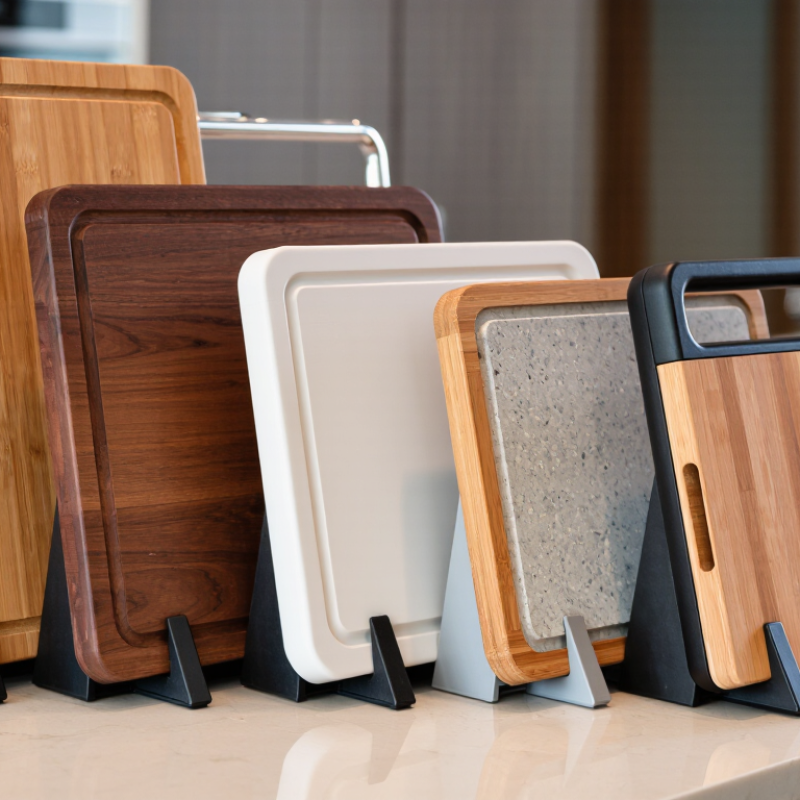
2026 Best Standing Cutting Board Types for Global Buyers
What Is a Standing Cutting Board?
A standing cutting board is a raised or upright board designed to stay stable during food preparation. Unlike a flat board, it may include legs, a support frame, or a weighted base. Some models stand on a countertop, while others lean vertically against a wall. The term is not fully standardized, so buyers should check the product structure carefully.
From practical kitchen testing, stability matters more than height alone. A wide base reduces movement when slicing firm vegetables or carving cooked meat. A surface with shallow juice grooves can also control liquid, but grooves may be harder to clean. Common materials include hardwood, bamboo, plastic, and composite surfaces. Each choice affects knife feel, moisture resistance, weight, and maintenance. My view is simple: no material is perfect. A beautiful board may still warp if stored wet.
Tips: Check the base width, board thickness, and non-slip feet. Ask whether the board can be cleaned safely and dried completely. Measure the working height before ordering. For international buyers, confirm dimensions, packaging strength, and care instructions. Small details matter. A standing board should feel secure, easy to handle, and suitable for the user’s daily cutting habits.
The main types of standing cutting boards in 2026 include pedestal boards, wall-mounted boards, folding elevated boards, and rolling kitchen carts. Pedestal models lift the work surface above the counter, often 10 to 20 centimeters. They suit users who need less wrist bending. Wall-mounted boards save space in compact kitchens, but their hinges require regular inspection. Folding models travel well, although their joints can collect moisture. Rolling carts provide the largest preparation area and extra storage, but they need lockable wheels.
Material selection matters as much as structure. Hardwood offers a warm, stable surface, while food-grade plastic usually cleans faster and weighs less. A 2024 food-contact materials review from the European Food Safety Authority stresses migration control and proper-use conditions. Buyers should check surface certifications, drainage design, and replacement-panel availability. A board that looks premium may still trap liquid beneath its frame.
Hygiene cannot be an afterthought. The World Health Organization estimates that foodborne illness affects about 600 million people globally each year. Separate surfaces for raw meat and ready-to-eat foods remain sensible. Look for removable panels, rounded corners, and smooth welds. These details are easy to overlook. Real kitchens are rarely dry or perfectly organized. Some “standing” designs also feel unstable when users apply heavy downward force. Testing wobble, cleaning access, and working height before purchase is still the most reliable approach.
| Standing Cutting Board Type | Typical Construction | Common Materials | Typical Size Range | Best Use Case | Main Advantages | Key Limitations | Cleaning and Hygiene Considerations | Suitable Global Buyer Segment |
|---|---|---|---|---|---|---|---|---|
| Elevated-Leg Standing Board | Flat cutting surface raised on four short legs or a solid elevated base | Hardwood, bamboo, polypropylene, high-density polyethylene, or composite material | 35–60 cm long; 25–45 cm wide; 3–8 cm high | Daily food preparation where a raised working height is preferred | Improves hand clearance; keeps the underside away from the countertop; stable when fitted with non-slip feet | Takes more storage space than a conventional flat board; legs and joints may collect food residue | Wash and dry the top and base separately when possible; avoid prolonged soaking of wood or bamboo | Residential kitchens, cooking schools, meal-preparation services, and hospitality buyers |
| Foldable Standing Board | Cutting panel with hinged or collapsible support legs | Polypropylene, silicone, stainless steel hardware, bamboo, or laminated wood | 30–55 cm long; 20–40 cm wide when open | Small kitchens, temporary food stations, outdoor cooking, and travel use | Space-saving design; easy to transport; can be stored flat after use | Hinges may loosen over time; moving parts can reduce rigidity compared with fixed-leg designs | Inspect hinges and folds for trapped food; select models with removable or easily accessible supports | Online retailers, compact-home consumers, campers, caterers, and export distributors |
| Wall-Mounted Folding Board | Board attached to a wall, cabinet, or storage panel with a folding bracket | Hardwood, bamboo, laminated wood, stainless steel brackets, or food-contact plastic | 30–50 cm long; 25–40 cm wide; installation height varies | Very small kitchens and commercial areas requiring permanent workstation access | Uses vertical space; keeps the board off crowded counters; convenient for frequent preparation | Requires secure installation; fixed location limits portability; wall clearance must allow full opening | Allow the board to dry fully before folding; clean the wall-side surfaces and hardware regularly | Urban housing projects, compact-appliance retailers, institutional kitchens, and space-saving furniture buyers |
| Over-Sink Standing Board | Extended board supported by sink rims, side rails, or integrated legs | Bamboo, hardwood, stainless steel, polypropylene, or composite board material | 45–75 cm long; 25–45 cm wide | Food preparation over a kitchen sink to increase usable counter area | Creates temporary workspace; directs scraps toward the sink; useful in narrow kitchens | Fit depends on sink width; may become unstable if support points are uneven or wet | Clean the underside and support rails after each use; dry thoroughly to reduce microbial growth | Apartment kitchens, kitchenware retailers, meal-prep users, and buyers of multifunctional products |
| A-Frame or Easel-Style Standing Board | Rigid cutting panel held upright or angled by a rear support frame | Wood, bamboo, food-contact plastic, stainless steel, or mixed-material construction | 30–55 cm long; 25–45 cm wide; 20–45 cm standing depth | Display-oriented food preparation, serving areas, and kitchens needing an angled surface | Good visual presentation; can provide a more ergonomic working angle; folds in some designs | Requires more floor or counter depth; angle may reduce force during heavy chopping | Clean all frame contact points; avoid storing while damp, particularly with wood components | Specialty kitchen retailers, hospitality venues, cooking demonstrations, and giftware buyers |
| Raised Butcher-Block Style Board | Thick, heavy chopping block mounted on a broad integral base or substantial legs | End-grain or edge-grain hardwood, rubber feet, and food-safe finishing oil | 35–60 cm long; 25–45 cm wide; 6–12 cm high | Frequent chopping of vegetables, meat, and other ingredients requiring a robust surface | High stability and impact resistance; thick construction can be resurfaced in some designs | Heavy and less portable; requires more maintenance; wood is not generally dishwasher-safe | Hand-wash promptly, dry vertically or on its side, and periodically recondition with suitable food-safe oil | Professional kitchens, premium home users, culinary schools, and durable-goods importers |
| Commercial Sanitary Standing Board | Heavy-duty raised platform with non-porous surface and cleanable support structure | High-density polyethylene, polypropylene, stainless steel, or certified composite materials | 40–70 cm long; 30–50 cm wide; 4–10 cm high | High-frequency food preparation in restaurants, bakeries, catering, and institutional kitchens | Durable; resistant to moisture; easy to sanitize; often available in color-coded formats | Usually heavier and less decorative; may require dedicated storage and drainage space | Follow local food-contact cleaning procedures; use separate boards or color coding for different food categories | Food-service distributors, restaurants, hospitals, schools, and contract catering operators |
| Multi-Function Standing Board with Storage | Raised cutting surface combined with slots, drawers, knife storage, or ingredient containers | Bamboo, hardwood, stainless steel, polypropylene, silicone, or engineered composite materials | 35–65 cm long; 25–50 cm wide; 8–20 cm high | Organized meal preparation where tools and ingredients need to remain within reach | Combines preparation and storage; reduces countertop clutter; adds workflow convenience | More components increase weight, price, and cleaning requirements; storage cavities need regular inspection | Remove containers where possible; clean cavities, grooves, and knife slots separately and dry completely | Premium kitchenware channels, household retailers, culinary enthusiasts, and online marketplaces |
Buyer note: Dimensions and material combinations are typical industry ranges rather than universal specifications. Buyers should verify food-contact compliance, load stability, surface hardness, drainage, packaging requirements, and applicable regulations in the destination market.
2026 Best Standing Cutting Board Types for Global Buyers
Materials, Structures, and Functional Features
Standing cutting boards raise the work surface above the counter. This can improve posture during long preparation sessions. Common materials include hardwood, bamboo, food-grade plastic, and composite panels. Each choice behaves differently under moisture, heat, and repeated knife contact.
Hardwood offers a warm feel and strong knife response. Bamboo is lighter and usually resists moisture well. Plastic boards are easy to sanitize and often suit commercial kitchens. Composite boards can balance durability, weight, and surface stability. No material is perfect. Dense surfaces may dull knives faster, while softer wood can show deep cuts over time.
Structure deserves equal attention. A wide base, rubber feet, and a low center of gravity reduce movement. Some raised boards include side handles for safer lifting. Others provide a lower shelf for bowls or ingredients. A drainage groove can catch juice from tomatoes or meat, but narrow grooves are difficult to clean. I have found that removable parts improve maintenance, yet they may loosen after frequent washing. That detail is easy to overlook.
Global buyers should check dimensions, packaging strength, and care instructions before ordering. Humid regions need reliable moisture resistance and ventilation. Smaller kitchens may benefit from foldable legs or vertical storage. Look closely at edge finishing. Smooth corners reduce hand irritation and prevent trapped food particles. The best design is not always the heaviest one. Stable contact matters more than impressive thickness.
For global buyers, a standing cutting board should reduce bending without creating a contamination trap. The CDC estimates 48 million foodborne illnesses occur annually in the United States. Stable feet, rounded edges, and non-slip contact points matter. A board that rocks can push a knife sideways. That is a practical injury risk. FDA Food Code 2022 requires food-contact surfaces to be smooth, durable, and easily cleanable. Deep grooves and rough seams deserve caution.
Wood can feel gentle on knives, but it needs thorough drying.
High-density plastic is easy to wash, yet knife marks can collect residue over time.
Stainless steel offers strong durability, but it may dull blades faster.
I would not choose material by appearance alone. Ask for food-contact compliance documents and migration-test results for the destination market.
USDA FSIS recommends washing boards with hot, soapy water after use and sanitizing them when appropriate. A diluted chlorine solution may be suitable, but users must follow local rules and product labels. Store the board upright only after it is completely dry. Dishwasher cleaning is useful only when the construction allows it.
Replace any board with deep cracks, persistent odors, or unstable supports.
One weakness remains: standing designs often have more joints than flat boards. Those joints need inspection, because convenience can quietly increase maintenance.
Global buyers should compare standing cutting boards by use, not appearance alone. A freestanding board suits flexible kitchen layouts and temporary food-preparation stations. A wall-mounted model saves counter space but needs reliable installation. Foldable designs travel easily, although their hinges may collect moisture and food particles.
Check stability on a wet, uneven surface. A board should resist sliding when a cook presses down with a chef’s knife. Review the base width, rubber feet, board thickness, and overall weight. Materials also matter. Hardwood can feel warm and durable, while plastic is often easier to sanitize and replace. Composite surfaces may balance both qualities, but their long-term wear requires inspection. No type wins every test.
Experienced buyers should request product drawings, material details, load data, and food-contact documentation for the destination market. Ask suppliers how they test odor retention, staining, edge damage, and repeated washing. Compare packaging dimensions and moisture protection before calculating landed cost. A large board may look efficient, yet its shipping volume can raise expenses sharply. Samples reveal what specifications cannot. Test one after several cleaning cycles. Check corners, seams, drainage, and standing balance. Small flaws matter. I have seen attractive designs fail because water stayed beneath the base. That lesson deserves space in every comparison sheet.
Typical material density comparison for evaluating storage weight, stability, and handling requirements
Density values are representative material ranges converted to approximate midpoints: lower-density boards are generally easier to lift and store, while higher-density materials usually provide greater weight and standing stability. Actual performance also depends on board thickness, feet, surface texture, and construction.
It raises the work surface above the counter. This can reduce wrist bending during long food preparation. Height matters.
Wall-mounted or folding models usually save the most space. Folding legs can fit inside a narrow cabinet. Check the hinges often.
Hardwood feels stable and gentle on knives. Food-grade plastic cleans faster and weighs less. No material wins every category.
Choose wide supports, rubber feet, and a low center of gravity. Test the board with firm downward pressure. A slight wobble matters.
They can catch juice from tomatoes or other wet foods. Narrow grooves may trap residue and become difficult to clean. Inspect them closely.
Wash it with hot, soapy water after use. Sanitize it when appropriate and follow local instructions. Store it upright only when fully dry.
Separate surfaces for raw meat and ready-to-eat foods are sensible. This reduces cross-contact risks. One board is not always enough.
Replace it when deep cracks, lasting odors, or unstable supports appear. Knife marks alone may not require replacement. Use judgment.
Check dimensions, packaging strength, care instructions, and food-contact documents. Humid areas need ventilation and moisture resistance. I might overlook packaging at first.
They can improve cleaning access around joints and lower shelves. Frequent washing may loosen them over time. Convenience needs inspection.
A Standing Cutting Board is a raised or vertically supported preparation surface designed to improve stability, accessibility, and workspace organization. In 2026, global buyers can choose from several types, including freestanding boards, wall-supported models, foldable designs, height-adjustable versions, and multifunctional boards with storage or drainage features. Each type serves different needs in home kitchens, catering environments, food preparation areas, and commercial operations.
Material and construction should be evaluated carefully, with options such as hardwood, bamboo, plastic, composite, and stainless steel offering different balances of durability, weight, hygiene, and maintenance. Buyers should also consider non-slip bases, reinforced joints, replaceable surfaces, rounded edges, and easy-clean designs. Safe use depends on stable placement, moisture control, regular sanitation, and timely replacement when deep grooves or structural damage appear. By comparing size, load capacity, portability, cleaning requirements, certifications, packaging, and regional market preferences, global buyers can select the most practical Standing Cutting Board type for their customers and intended applications.

Joywave