Choosing the right Metal Cutting Board for commercial use requires more than comparing prices and surface finishes. Busy kitchens need equipment that supports hygiene, speed, durability, and consistent food preparation. A board may look strong under bright restaurant lighting, yet feel awkward during a long service. Weight, edge design, noise, knife response, and cleaning routines can change daily performance.
This guide examines ten leading options for professional kitchens, butcher shops, catering operations, and food production areas. Each board is considered through practical criteria, including material quality, corrosion resistance, stability, maintenance, and workplace comfort. Stainless steel often appears dependable, but dependable does not mean perfect. Some metal surfaces can feel harsh against knives or create distracting noise. That deserves attention.
Real kitchens reveal details that product pages often miss. A wet board may slide. A heavy board may strain staff during cleaning. Small scratches can also complicate visual inspections. We focus on these everyday concerns, not only impressive specifications. The evaluation draws on manufacturer information, professional handling principles, and realistic commercial workflows. Still, no single board suits every operation. Meat preparation, bakery work, seafood handling, and general food service may require different priorities. Readers should compare these findings with their own sanitation procedures, knife systems, counter materials, and cleaning equipment. The best choice is practical, verifiable, and suitable for repeated use—not merely attractive in a catalog.
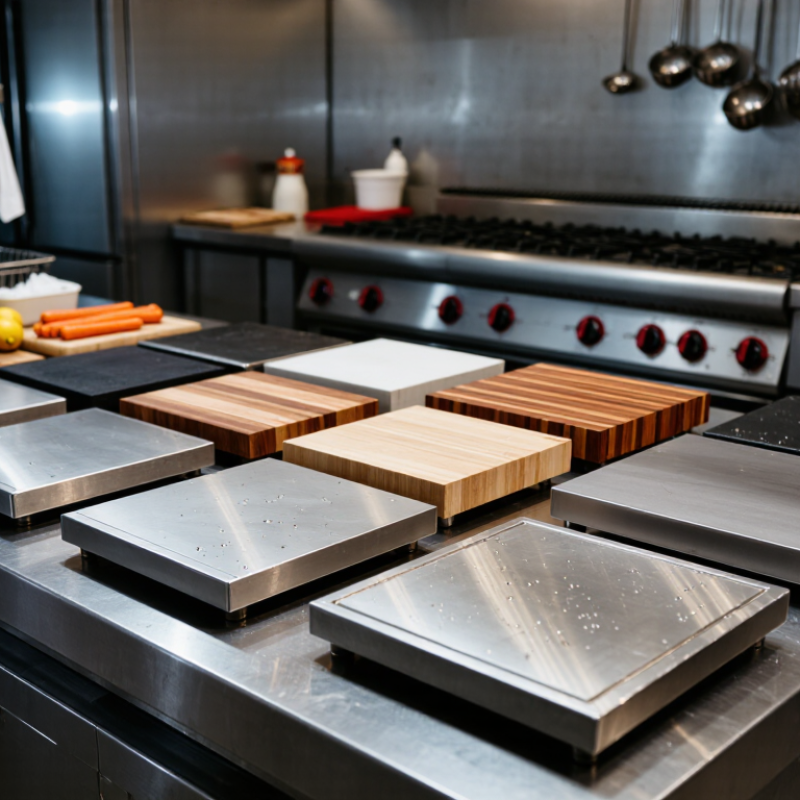
Commercial kitchens use several metal cutting-board types, and each behaves differently under heat, moisture, and heavy knife work. Stainless steel remains the practical baseline. Food-grade 304 stainless steel resists corrosion, absorbs no liquid, and tolerates frequent washing. The FDA Food Code 2022 requires food-contact surfaces to be smooth, corrosion-resistant, nonabsorbent, and easily cleanable. A brushed finish can hide scratches, but deep scoring still creates cleaning problems.
Aluminum boards are lighter and usually less expensive. They also dent more easily and may react with acidic foods, such as tomatoes, citrus, or vinegar-based marinades. Titanium offers excellent corrosion resistance and lower weight, yet its high cost limits routine commercial use.
Some kitchens choose layered boards, combining a rigid metal surface with a replaceable food-contact layer. That design can reduce noise, but seams deserve close inspection.
The hygiene stakes are not theoretical. The World Health Organization estimates that contaminated food causes about 600 million illnesses and 420,000 deaths globally each year. A metal board cannot prevent cross-contamination by itself. Staff still need separate preparation zones, verified cleaning procedures, and regular surface checks.
Stainless steel is tough, but it can be hard on knives and wrists. That trade-off is easy to overlook. A board that looks spotless may still be poorly suited to long shifts. Personnel should inspect edges, welds, dents, and surface wear before deciding whether a metal board belongs in daily production.
Key Features to Evaluate Before Choosing a Metal Cutting Board
A commercial metal cutting board must survive repeated washing, impact, and heavy knife work. The FDA Food Code 2022 requires food-contact surfaces to be smooth, durable, nonabsorbent, and corrosion-resistant. Check the board’s alloy, weld quality, surface finish, and resistance to pitting. Stainless steel is practical, but not every grade performs equally near salt, acids, or constant moisture. Ask for documented material specifications, not vague “food-grade” claims.
Size and stability matter during a busy shift. A board should remain flat when a cook chops dense vegetables or portions meat. Rounded corners reduce residue traps, while a slightly textured underside can prevent sliding. It should also fit inside the site’s sink or dishwasher. A board that cannot be cleaned completely is a poor investment. The WHO estimates that contaminated food causes about 600 million illnesses and 420,000 deaths worldwide each year. Hygiene details deserve serious attention.
Noise and knife wear are easy to underestimate. Metal can produce sharp impact sounds and may dull blades faster than softer surfaces. A replaceable cutting mat or cushioned base can reduce both problems, if it remains washable and securely attached. Review the NSF/ANSI 2 food-equipment requirements, then inspect the board in person. Heavy does not always mean better. Thin boards may flex, but oversized units can strain workers and damage counters. Some specifications still overlook drainage and handling comfort. That deserves a second look.
This weighted evaluation model highlights the features that matter most in commercial kitchens. Hygiene, corrosion resistance, durability, and ease of cleaning receive the greatest emphasis because they directly affect food safety, service life, and daily maintenance. The percentages represent a practical purchasing framework rather than a brand-specific product rating.
The best metal cutting boards must balance hygiene, stability, knife care, and daily workload. A flat 304 stainless-steel board suits general prep and resists rust in busy kitchens. A 316 stainless-steel board handles salty or acidic foods better.
Brushed surfaces reduce visible scratches, while a heavy-gauge board stays steadier during portioning. A lightweight aluminum board is easier to move, but it can dent and mark more quickly.
Other strong choices include a board with silicone feet, a reversible board, and a model with a shallow juice channel. A perforated surface can help drain seafood liquids, although it is less comfortable for fine chopping.
Rounded corners also matter. They prevent grime from collecting in sharp joints.
In commercial use, cleaning practice matters as much as metal grade. Wash the board with approved detergent, rinse it fully, and dry it before storage.
Inspect deep scratches, bent edges, loose feet, and exposed seams each day. Metal can be sanitized effectively, but it may dull knives and create harsh cutting noise.
I once preferred the heaviest board available. That choice was not always right; staff avoided moving it, and cleaning became inconsistent.
A slightly lighter board may perform better when workers can lift and inspect it safely. Avoid using metal boards for every task. Soft produce and precision knife work may need a suitable non-metal surface.
Safety and hygiene should guide every metal board choice in a commercial kitchen. Stainless steel offers a nonporous surface that resists food odors, moisture, and bacterial buildup. However, a wet board can slide quickly. Use a stable base or nonslip mat, especially during heavy chopping. Rounded edges reduce hand injuries, while a smooth, seamless surface supports thorough cleaning. Avoid boards with deep dents, exposed welds, or peeling coatings. These defects can trap food and complicate sanitation checks.
Clean the board immediately after raw meat, seafood, or produce preparation. Remove debris, wash with approved detergent, rinse, and apply a suitable food-contact sanitizer. Follow the sanitizer’s label instructions carefully. Let the surface air-dry completely before storage. Never stack damp boards. Moisture can create unpleasant odors and encourage corrosion around joints. Inspect the board daily under bright light. Small scratches may seem harmless, but repeated damage can become difficult to clean. I have seen teams overlook this step during busy service. That habit needs correction.
Tips: Keep separate boards for raw and ready-to-eat foods. Use color-coded storage labels. Dry knives after washing, because metal surfaces can dull edges faster. Check corners and feet weekly. Replace boards that wobble, rust, or develop deep grooves. Record cleaning checks during each shift, even when the kitchen feels rushed.
Choosing the best metal cutting board for your business starts with the work it must endure. A busy bakery needs a different surface from a seafood counter. Stainless steel offers strong corrosion resistance and easy cleaning. Aluminum is lighter, but it can scratch and dent more easily. Check the metal grade, thickness, and surface finish before comparing prices.
A smooth, nonporous surface helps prevent food residue from hiding in deep marks. However, metal can make knives dull faster than softer cutting materials. It may also become slippery when wet. Look for rounded edges, stable feet, and enough weight to prevent movement during chopping. A slightly textured finish can improve grip, but heavy texture may trap residue. That trade-off deserves attention.
Cleaning routines matter as much as construction. Confirm that the board tolerates your approved detergents, sanitizers, and washing temperatures. Ask for test documentation when food-contact compliance is important in your region. Inspect welds, corners, and underside spaces during each shift. Small gaps often become difficult cleaning points. Do not ignore noise, either; metal striking metal can make a crowded kitchen exhausting. I once underestimated that problem. A board that survives years of use may still frustrate staff every day. Choose a size that fits your sink, storage rack, and preparation station. Oversized equipment sounds productive, but it can block movement and encourage unsafe handling.
Food-grade stainless steel is usually the practical choice. It resists corrosion, absorbs no liquid, and tolerates frequent washing.
Aluminum is lighter and often less expensive. However, it dents more easily and may react with tomatoes, citrus, or vinegar.
Titanium offers excellent corrosion resistance and low weight. Its high cost can make routine use difficult for many kitchens.
Choose smooth, nonporous, seamless surfaces with rounded edges. Avoid deep dents, exposed welds, peeling coatings, and heavy grooves.
Remove debris immediately. Wash with approved detergent, rinse, sanitize properly, and let the board air-dry completely.
No. Use separate preparation zones and boards for raw and ready-to-eat foods. Color-coded labels can make separation clearer.
Use stable feet or a nonslip mat. A wet board can slide quickly, especially during forceful chopping.
Check edges, welds, corners, feet, dents, rust, grooves, and underside gaps. A bright light helps reveal small surface damage.
Yes. Metal can dull knife edges faster and strain wrists during long shifts. That trade-off is easy to overlook.
Select a board that fits the sink, storage rack, and preparation station. Oversized boards may block movement and create unsafe handling.
Choosing the right Metal Cutting Board is an important decision for any commercial kitchen. This guide explores the main types available, including stainless steel, aluminum, and other food-safe metal options, while explaining how each performs in terms of durability, weight, cutting resistance, and heat tolerance. It also highlights key features to evaluate, such as surface stability, edge design, thickness, ease of cleaning, corrosion resistance, and compatibility with professional workspaces. A carefully selected board can support efficient food preparation while maintaining a clean and organized kitchen environment.
The guide also presents ten practical Metal Cutting Board options for professional use and compares their suitability for different business needs, from high-volume preparation to specialized tasks. It explains essential safety, hygiene, and maintenance standards, including proper washing, sanitizing, drying, inspection, and storage. Finally, readers will learn how to balance budget, workflow, staff requirements, material quality, and long-term value when selecting the best board for their business.

Joywave